The Best Audio Interfaces for Beginners
When Do You Actually Need an Audio Interface?
You don't need an audio interface to start making music.
Your computer already has one.
Technically.
It can:
Play audio.
Record its built-in microphone.
Run your DAW.
Connect headphones.
For making beats with MIDI and software instruments...
That might be enough.
But eventually you want to plug something into your studio that your computer wasn't designed for.
An XLR microphone.
A guitar.
A pair of powered studio monitors.
That's when an audio interface starts to make sense.
3 Home Studio Setups for Every Budget (and What to Avoid) 🎛️
Quick Summary
👉 Keep using your computer's built-in audio if you're mainly using software instruments, MIDI and headphones.
👉 Get an audio interface when you want to connect XLR microphones, guitars, studio monitors or other professional audio equipment.
For most beginners, you only need:
- 1–2 microphone inputs
- Instrument input
- Headphone output
- Two monitor outputs
- USB connection
You don't need 20 inputs.
You need the ones you're actually going to use.
🎛️ What Does an Audio Interface Do?
An audio interface sits between your studio and your computer.
Think of it as a translator.
Your microphone creates an analog signal.
The interface converts it into digital audio for your computer.
Then it does the opposite on the way back out.
Microphone → Interface → Computer
And:
Computer → Interface → Speakers
Most beginner interfaces also include microphone preamps, headphone amplification, monitor volume control and instrument inputs.
One small box becomes the center of your studio.
The Zen of Small Studios: Why Constraints Make You More Creative 🧘
🎙️ When Do I Need One for a Microphone?
If you're using a USB microphone, you don't necessarily need an interface.
The interface is already built into the microphone.
But most professional studio microphones use:
XLR.
Your computer doesn't have an XLR microphone preamp.
An audio interface does.
It also commonly provides 48V phantom power for condenser microphones. For example, the Universal Audio Volt 2 includes two mic preamps and 48V phantom power.
Once you want to use traditional studio microphones...
It's time for an interface.
🔊 When Do I Need One for Studio Monitors?
Powered studio monitors need an audio signal.
You can technically find ways to connect some speakers directly to a computer headphone output.
But an interface gives you proper dedicated outputs and a physical volume control designed for monitoring.
Plug your monitors into the interface.
Then your interface becomes the volume control for your studio.
Simple.
How Do I Set Up an Audio Interface and Speakers in My Home Studio?
1. 🔴 Focusrite Scarlett
The Focusrite Scarlett series might be the obvious starting point.
There are different sizes depending on how much you need to record.
For a solo producer:
Scarlett Solo.
For two microphones or instruments:
Scarlett 2i2.
The current Scarlett 2i2 4th Gen includes two microphone preamps, instrument/line inputs, Auto Gain, Clip Safe and Focusrite's Air modes.
Best For
- Singer-songwriters
- Guitarists
- Vocalists
- Home studios
- First-time producers
The Scarlett series is popular for a reason.
It gives you the important stuff...
Without giving you too much stuff.
2. ⚡ Universal Audio Volt
Universal Audio Volt brings some of Universal Audio's studio heritage into a much more affordable interface.
For beginners, the Volt 1 or Volt 2 are the obvious places to look.
The Volt 2 gives you:
- Two microphone preamps
- Two inputs and two outputs
- Instrument recording
- Phantom power
- Direct monitoring
- Headphone output
- MIDI
- Vintage Mic Preamp mode
Its Vintage mode is designed to add character inspired by Universal Audio's classic 610 tube preamp.
Best For
- Vocalists
- Guitarists
- Songwriters
- Producers who like vintage character
If Scarlett is clean and practical...
Volt adds a little more personality.
 ⭐️ Download my Free Music Production Guides or take my free Ableton Live Course ⭐️
3. 🟢 Audient EVO 4
The Audient EVO 4 is built around simplicity.
Two microphone inputs.
Instrument input.
Headphone output.
Monitor outputs.
One big control knob.
But the feature that makes it especially interesting for beginners is:
Smartgain.
Smartgain can automatically set your recording gain for you.
That means less time thinking:
Is this knob set correctly?
And more time recording.
The EVO 4 also includes audio loopback, which can be useful for streaming, podcasting and recording computer audio.
Best For
- Complete beginners
- Vocalists
- Content creators
- Podcasters
- Producers recording themselves
This might be the easiest interface here to understand.
How to Build an Inspiring Home Studio for Singer-Songwriters
4. 🔵 MOTU M2
The MOTU M2 is another excellent 2-in/2-out option.
MOTU describes it as a USB-C interface designed around high-quality conversion and very low latency.
One of its nicest features is the front-panel display.
You can actually see your recording levels clearly.
That sounds like a small thing.
It isn't.
When you're learning how to record...
Seeing your level can make gain staging much easier to understand.
Best For
- Musicians
- Recording engineers
- Home studios
- Producers who want clear metering
Simple interface.
Excellent visual feedback.
⚔️ Which Beginner Audio Interface Should You Choose?
Here's the simple version:
| Interface | Best For |
|---|---|
| Focusrite Scarlett | Best all-around choice |
| Universal Audio Volt | Vintage character |
| Audient EVO 4 | Easiest to use |
| MOTU M2 | Great metering and recording |
Don't obsess over tiny differences in specifications.
For your first interface...
The bigger question is:
What do you need to plug into it?
🎙️ How Many Inputs Do You Need?
This is where beginners often buy too much.
If you're recording:
One vocal microphone.
One guitar.
One synthesizer.
One instrument at a time.
You probably don't need eight microphone preamps.
A simple 2-in/2-out interface can take you surprisingly far.
Two inputs means you can record:
A stereo keyboard.
Two microphones.
Vocal + guitar.
Or any other combination of two signals.
If you're planning to record an entire drum kit...
That's different.
Now you need more inputs.
Buy for the studio you're actually building.
Not the imaginary studio you might build someday.
🥷 Start With Your Computer
Start simple.
Computer.
DAW.
Headphones.
Make music.
Eventually you'll reach a point where your computer can't connect to something you want to use.
An XLR microphone.
A guitar.
Studio monitors.
That's the signal.
You don't buy an audio interface because you're finally becoming a real producer.
You buy one because you finally need an interface between two things.
That's exactly what it is.
Your studio's translator.
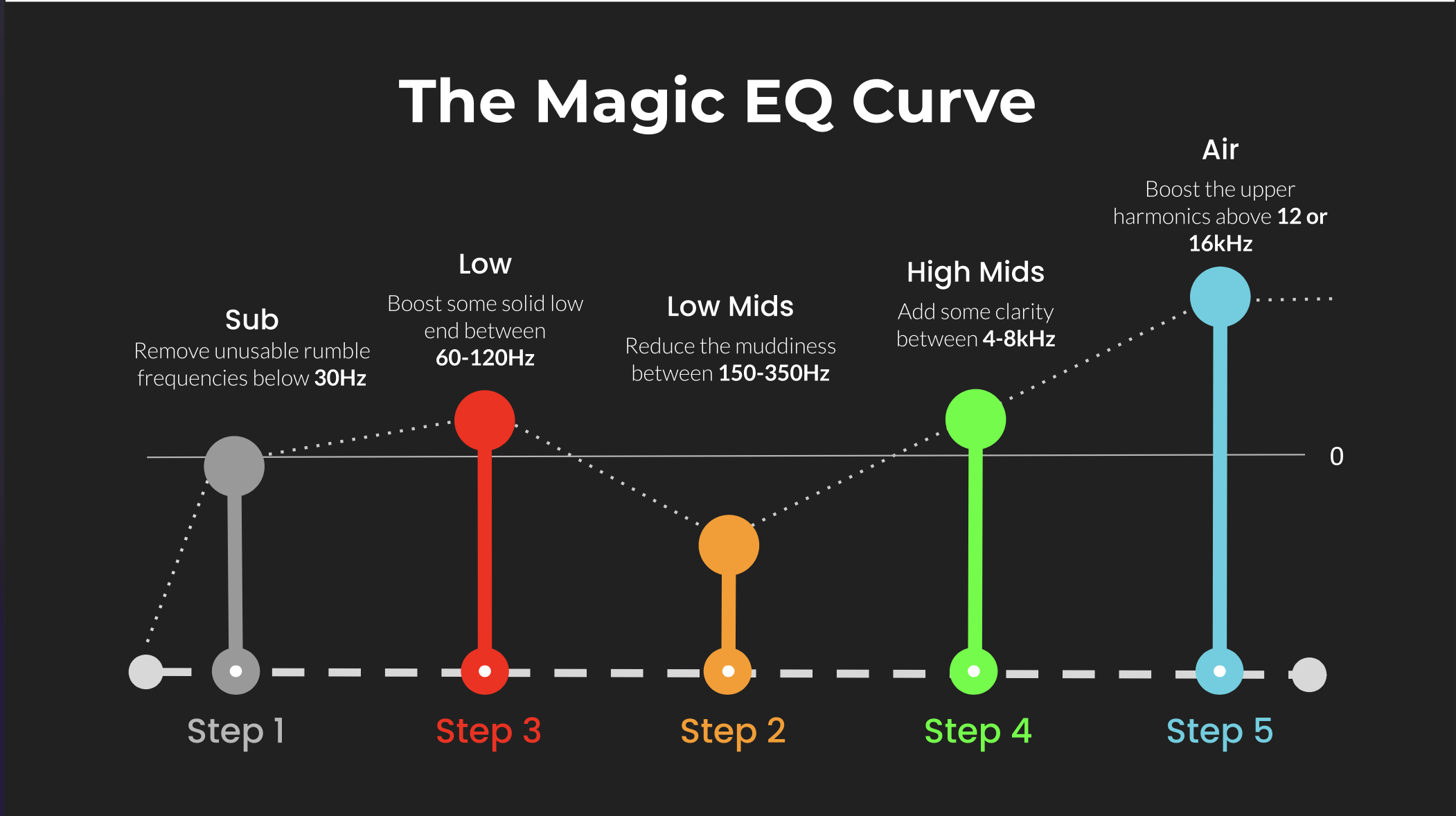 ⭐️ Download my Free Magic EQ settings Guide ⭐️

⭐️ Download my Free Magic Reverb settings Guide ⭐️
#protools #daw #homestudio #recordingschool #recording #musicproduction
Also read:
How to Start Your Own Online Business Teaching Music

Hey, I'm Futch - Music Production Coach and Ableton Certified Trainer

Learn how to make your first song and beat in Ableton Live with my
FREE 90-minute Ableton Live course
I've been teaching audio engineering and music production for 35 years.⭐️
Check out my new online music production program: Music Production Ninja...