Synth Legends: The Sequential Prophet-5 🔮

The First True Analog Prophet
Most synthesizers of the ’70s gave you two choices:
monophonic power or polyphonic compromise.
The Sequential Prophet-5 changed that in a single moment.
Warm.
Fat.
Polyphonic.
Programmable.
It was the first synthesizer to combine:
-
true analog oscillators
-
lush polyphony
-
patch memory
-
modern workflow
The Prophet-5 didn’t just enter the synth world —
it reset the standard.
Quick Summary:
👉 Released in 1978, the Sequential Prophet-5 is a 5-voice analog polyphonic synthesizer with patch memory and Curtis analog chips. It defined the sound of ’80s pop, film scoring, electronic music, and modern synth production.
⚙️ The History — When Synthesis Became Modern
Question: Why is the Prophet-5 considered revolutionary?
Before the Prophet-5, polyphonic synths were either:
-
modular and unpredictable
-
fixed-architecture but unstable
-
or unable to save sounds
Dave Smith and Sequential Circuits changed everything in 1978 with the Prophet-5 Model A.
It introduced:
-
five independent voices
-
two analog oscillators per voice
-
a gorgeous 24dB Curtis low-pass filter
-
and the first widely adopted patch memory system ever
For the first time, musicians could:
-
build a sound
-
save it
-
return to it
-
play it polyphonically
-
and trust it on stage
It was a revolution disguised as an instrument.
🎯 Core Innovations
-
Five-voice polyphony — lush, expressive chords.
-
Patch memory — a groundbreaking feature.
-
Curtis CEM chips — warm, balanced, unmistakable tone.
-
Two analog oscillators per voice — huge harmonic weight.
-
Modulation section — flexible but intuitive.
“The Prophet-5 didn’t follow analog tradition.
It created the modern synthesizer blueprint.”
🧩 Balance Point
Between power and simplicity.
Between warmth and control.
🔑 Key Takeaway
The Prophet-5 was the first truly professional polyphonic synthesizer.
Synth Legends: The Roland Juno-106 🌈
🔊 The Originality — The Voice of Analog Destiny
Question: What makes the Prophet-5’s sound so iconic?
Where other synths were raw or chaotic…
the Prophet-5 was elegant.
Its tone had:
-
weight
-
warmth
-
clarity
-
confidence
It didn’t sound unstable like the MS-20.
It didn’t sound crystalline like the DX7.
It didn’t sound silky like the Juno.
It sounded prophetic —
a perfect balance of analog depth and musical sophistication.
🎯 Core Sound Traits
-
Lush pads — warm, emotional, cinematic.
-
Punchy stabs — the backbone of synth pop.
-
Velvety leads — expressive and smooth.
-
Massive unison bass — thick, controlled, authoritative.
-
Filter sweeps — buttery, musical, unmistakable.
“The Prophet-5 is what analog sounds like when it grows up.”
🧩 Balance Point
Between character and precision.
Analog tone without analog problems.
🔑 Key Takeaway
The Prophet-5’s originality lies in its elegant, confident analog voice.
Synth Legends: The Moog Minimoog 🎛️
🌍 The Cultural Impact — The Synth of the Stars
The Prophet-5 became the instrument for the producers, composers, and bands shaping the sound of the late ’70s and ’80s.
It wasn’t a tool — it was an aesthetic.
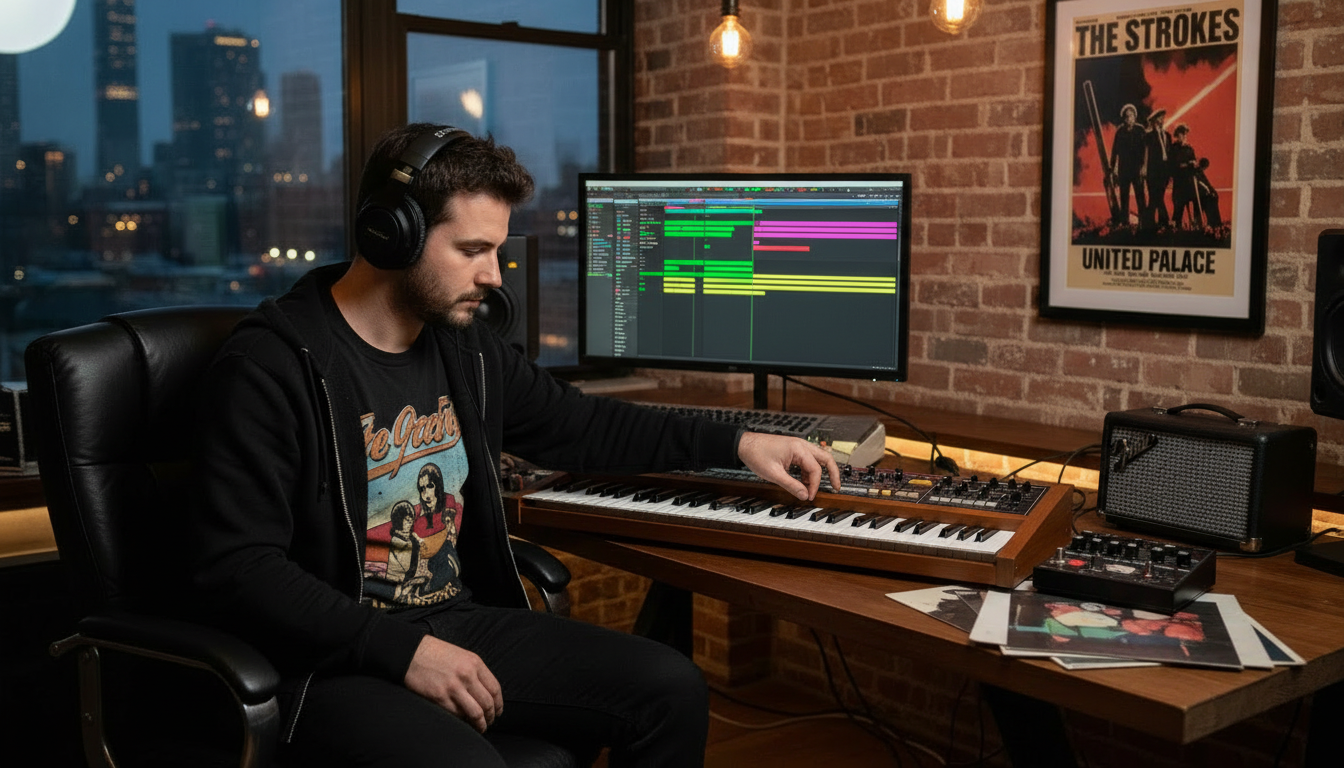 ⭐️ Start by downloading all of my FREE Music Production Guides ⭐️ It took me years to learn this stuff!
🎤 Synth Pop & New Wave — The Prophet Era
The Prophet-5 defined the sound of '80s radio.
Key artists
-
Duran Duran
-
Peter Gabriel
-
Tears for Fears
-
Depeche Mode
-
Madonna (early producers)
Prophet pads and stabs are the backbone of synth pop.
Beatmaking Legends: 6 Classic Turntables, Drum Machines, and Samplers 🎶
🎬 Film Scoring — Analog Emotion
Film composers loved the Prophet-5 for its cinematic weight.
Key composers
-
Vangelis – Blade Runner layers (Prophet-10 variant)
-
John Carpenter
-
Jerry Goldsmith
The Prophet brought emotional depth to electronic scoring.
🎛️ Electronic Music — Future-Proof Analog
Electronic producers embraced the Prophet for its tone.
Key artists
-
Trent Reznor (NIN)
-
Boards of Canada
-
Phil Collins
-
Tycho
Its warm pads and resonant textures became timeless.
"In the Air Tonight" - Phil Collins
🎸 Pop, Indie & Modern Production
The Prophet-5 remains a go-to for modern producers.
Key artists & producers
-
Tame Impala
-
The Weeknd (production teams)
-
Bon Iver (synth textures)
-
Kacey Musgraves (synth pop-country blends)
Even today, it’s a “finishing touch” synth —
the tone that elevates everything around it.
🧩 Balance Point
Between mainstream pop clarity and deep analog character.
No other synth walks this line so perfectly.
🔑 Key Takeaway
The Prophet-5 became the default sound of emotional analog synthesis.
🧠 FAQ
Q: When was the Prophet-5 released?
A: 1978.
Q: Why is the Prophet-5 famous?
A: It pioneered patch memory, 5-voice analog polyphony, and a warm, confident tone.
Q: What genres use the Prophet-5?
A: Pop, electronic, synth-wave, film scoring, indie, and ambient.
Q: Who made the Prophet-5 legendary?
A: Peter Gabriel, Vangelis, Duran Duran, John Carpenter, modern electronic producers, and synth-pop pioneers.
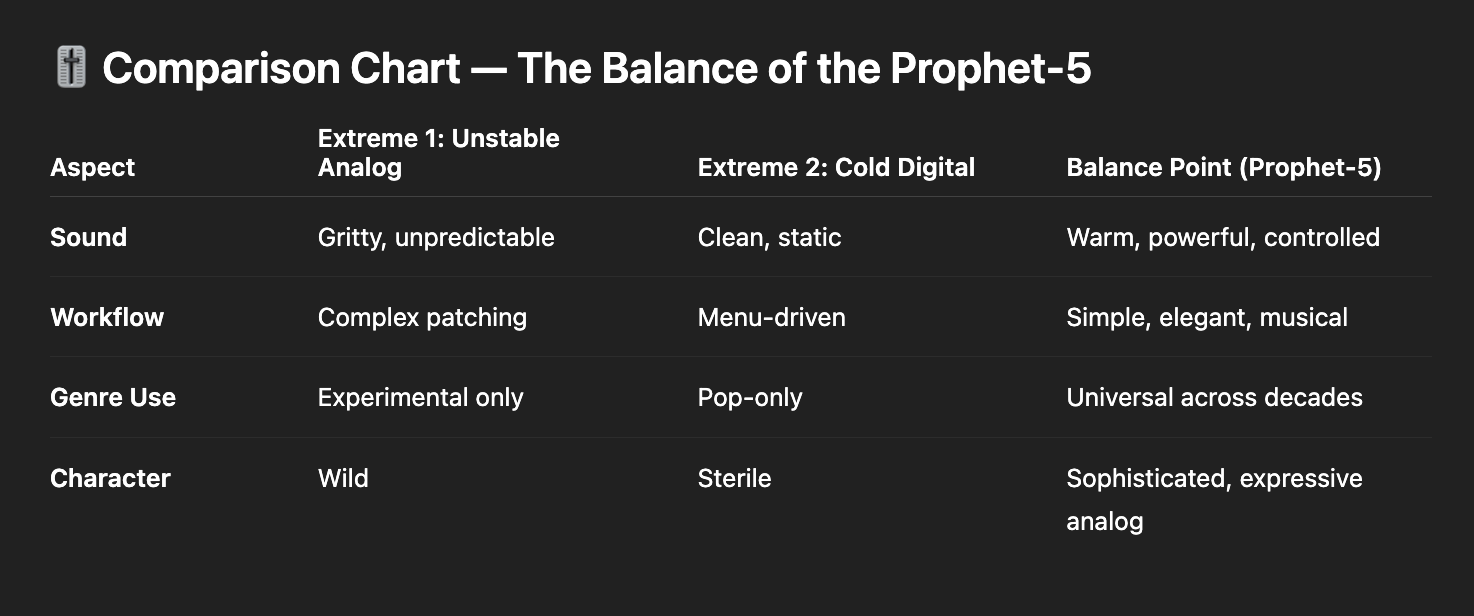 ⭐️ Download my Free Guide The Magic EQ Settings that work on EVERYTHING!
🔑 Why This Matters
The Prophet-5 is not just a synthesizer.
It is a landmark.
A turning point.
The moment analog synthesis became modern.
It gave musicians a powerful new language:
warmth with stability,
complexity with clarity,
emotion with precision.
“The Prophet-5 is the sound of analog prophecy —
a voice that feels inevitable.”

⭐️ Download my Free Magic Delay settings Guide ⭐️

⭐️ Download my Free Magic Reverb settings Guide ⭐️
#protools #daw #homestudio #recordingschool #recording #musicproduction
Also read:
How to Start Your Own Online Business Teaching Music

Hey, I'm Futch - Music Production Coach and Ableton Certified Trainer

Learn how to make your first song and beat in Ableton Live with my
FREE 90-minute Ableton Live course
I've been teaching audio engineering and music production for 35 years.⭐️
Check out my new online music production program: Music Production Ninja...