How to Remove Noise, Hum and Clicks from Your Recordings 🧹

The Take Was Perfect. The Background Wasn't.
You nailed the vocal.
Best take of the night.
Then you solo it.
HISSSSS.
A low hummmm under every word.
A click right before the chorus.
The fridge.
The fan.
The cable.
Is the take ruined?
Usually not.
Can you fix all of it?
Most of it.
Some of it is easier to stop next time.
Also read: Demystifying the Noise Gate: What Is It and When Do I Need One?
Quick Summary
Different noise needs a different tool:
👉 Rumble (low thuds, traffic, footsteps) — a high-pass filter
👉 Hum (a steady low tone) — a narrow notch EQ at 60 Hz or 50 Hz
👉 Hiss and room noise — noise reduction
👉 Clicks and pops — de-click, or edit them out by hand
👉 Noise between phrases — a noise gate or clip edits
Fix the loudest problem first.
Use the smallest tool that works.
And listen after every step.
1. 🔍 Name the Noise
Before you fix it, listen to it.
Solo the track.
Find a spot where nobody is singing or playing.
What do you hear?
Rumble
Low.
Uneven.
Thuds.
Hum
Low.
Steady.
One pitch that never changes.
Hiss
High.
Steady.
Like air.
Clicks
Short.
Sharp.
Here and gone.
Each one has its own fix.
2. 🎚️ Rumble: High-Pass Filter
Most vocals and guitars have nothing useful down at the very bottom.
Add an EQ.
Turn on the high-pass filter.
Start around 80 Hz for vocals.
Move it up until the voice starts to sound thin.
Then back it down a little.
Rumble gone.
Voice untouched.
Also read: DAW EQ: The 7 Frequency Bands 🎛️
3. ⚡ Hum: Notch It Out
Electrical hum sits at the power frequency.
60 Hz in North America.
50 Hz in most of Europe, Asia, Africa and Australia.
It often has partners at double and triple that frequency.
120 Hz.
180 Hz.
Use a very narrow EQ band.
Cut deep at 60 Hz (or 50 Hz).
Then check the next one up.
Narrow is the trick.
Wide cuts take the body out of your sound.
 ⭐️ Download my Free Music Production Guides or take my free Ableton Live Course ⭐️
4. 🌬️ Hiss: Noise Reduction
Noise reduction learns what your noise sounds like.
Then it pulls that sound out of the whole track.
Most tools work the same way:
👉 Select a few seconds of noise only
👉 Let the tool learn it
👉 Apply it to the whole track, gently
Free:
Audacity has a Noise Reduction effect built in.
Paid:
iZotope RX is the tool many studios use.
Go easy.
Too much and the voice sounds watery.
Also read: Audacity 4: Is It Finally a DAW?
5. 🖱️ Clicks: Zoom In
A click is usually a tiny spike in the waveform.
Zoom all the way in.
You'll see it.
In Ableton Live, add a short fade to the clip edge or split the clip around the click and fade across it.
Many DAWs and RX also have a de-click tool for lots of small clicks at once.
Also read: Learn to Record: Recording Vocals & Instruments for Beginners
⚔️ Noise Fixes Compared
| Noise | What It Sounds Like | Fix |
|---|---|---|
| Rumble | Low thuds | High-pass filter |
| Hum | Steady low tone | Narrow notch EQ at 60 Hz or 50 Hz |
| Hiss | Steady air | Noise reduction |
| Clicks | Short spikes | De-click or a fade |
| Noise between phrases | Room sound in the gaps | Noise gate or clip edits |
⚖️ Clean vs. Lifeless
Too little cleanup...
And the noise pulls attention from the song.
Too much...
And the voice sounds like a robot underwater.
Just right:
You notice the noise is gone.
You don't notice the tools.
🥷 Stop It Before You Press Record
The best noise reduction happens before the take.
Step 1
Turn off fans, fridges and air conditioners while you track.
Step 2
Keep audio cables away from power cables.
Try a different power outlet if you hear hum.
Step 3
Get the mic closer to the source.
More voice.
Less room.
Then clean up what's left.
Gently.
Fix it at the source first.
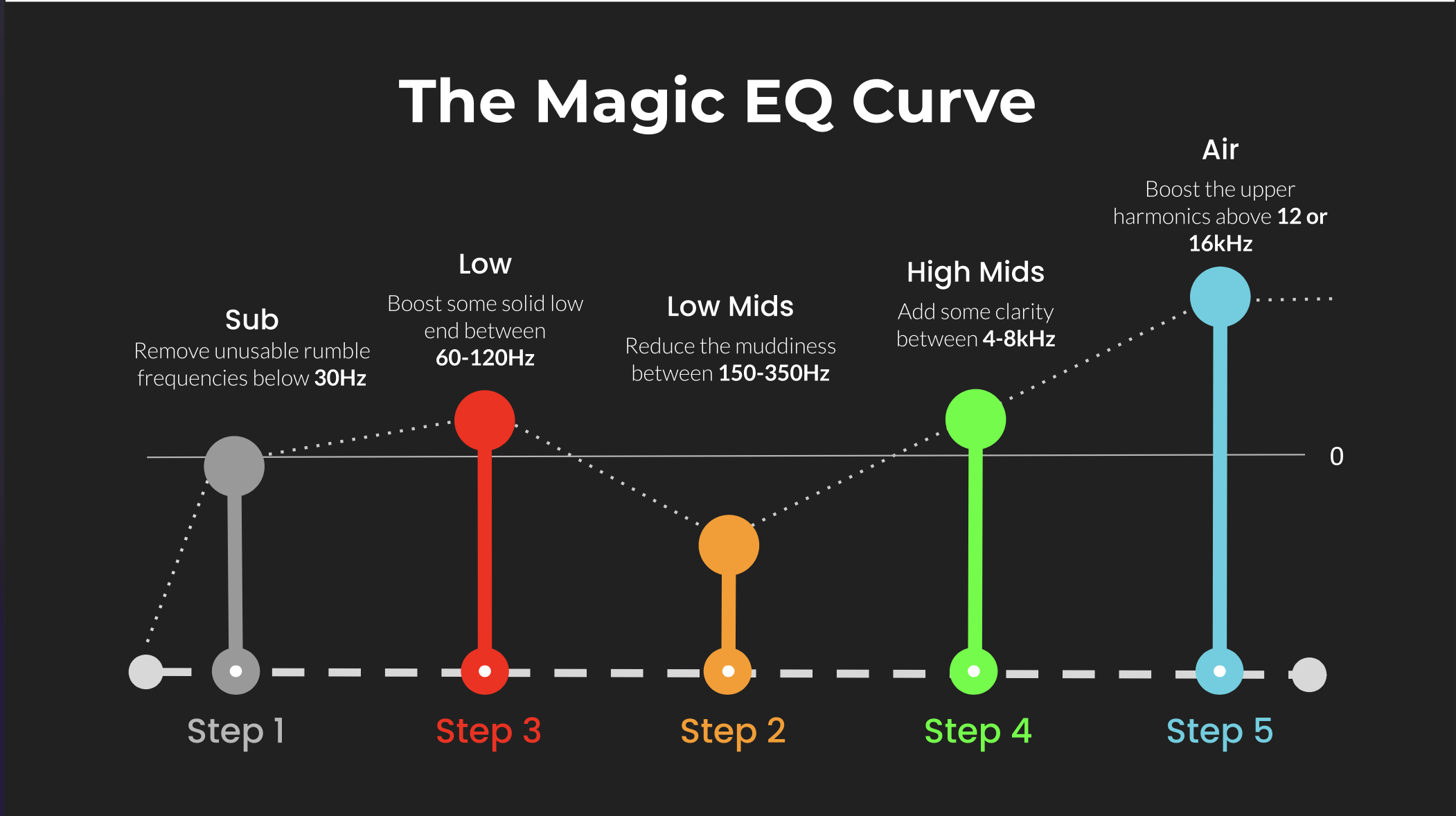 ⭐️ Download my Free Magic EQ settings Guide ⭐️

⭐️ Download my Free Magic Reverb settings Guide ⭐️
#protools #daw #homestudio #recordingschool #recording #musicproduction
Also read:
How to Start Your Own Online Business Teaching Music

Hey, I'm Futch - Music Production Coach and Ableton Certified Trainer

Learn how to make your first song and beat in Ableton Live with my
FREE 90-minute Ableton Live course
I've been teaching audio engineering and music production for 35 years.⭐️
Check out my new online music production program: Music Production Ninja...