Demystifying the Noise Gate: What Is It and When Do I Need One?

Silence Is Golden
You record a great guitar performance.
But between every note...
HISSSSS.
Or maybe your drum microphones are picking up every cymbal in the room.
Or your vocal recording has unwanted background noise between phrases.
You could spend hours editing.
Or...
You could use a noise gate.
Think of it as a door that automatically opens when you play...
And closes when you stop.
Quick Summary
A noise gate automatically reduces unwanted sound when your audio falls below a chosen level.
-
Threshold: When should the gate open or close?
-
Attack: How quickly should it open?
-
Hold: How long should it stay open?
-
Release: How quickly should it close?
-
Range: How quiet should the sound become?
The goal isn't always complete silence.
It's keeping the sounds you want while reducing the sounds you don't.
1. 🚪 How Does a Noise Gate Work?
Imagine a nightclub with a bouncer.
Loud enough?
Come on in.
Too quiet?
Door closed.
A noise gate works in a similar way.
When your audio rises above the threshold, the gate opens.
When it falls below the threshold, the gate closes, reducing the sound.
Unlike a compressor, which controls louder sounds, a gate primarily controls quieter ones.
Also read: The Magic Compressor Settings
2. 🎛️ The Five Main Controls
Threshold — The Trigger
Determines when the gate opens and closes.
Attack — The Opening
Fast attack preserves transients. Slow attack creates a softer beginning.
Hold — The Pause
Keeps the gate open briefly before it starts closing.
Release — The Closing
Fast release cuts sounds off quickly. Slow release allows them to fade naturally.
Range — The Depth
Determines how much the audio is reduced when the gate closes.
Start with a fast attack and a moderate release.
Then adjust until the gate sounds natural.
Also read: Audio Processing: How Attack and Release Time Works
3. 🎸 When Should I Use a Noise Gate?
Electric Guitar
Distorted guitar amplifiers can produce a lot of hiss.
A gate can reduce the noise between riffs without changing the notes themselves.
Be careful not to cut off the sustain.
 ⭐️ Download my
 Drums
Your snare microphone might also capture hi-hats and cymbals.
A gate can reduce that unwanted bleed between snare hits.
But set the release too fast...
And you'll lose the natural ring of the drum.
Also read:
Vocals
A gate can reduce background noise between vocal phrases.
But watch out for quiet words and breaths.
Too much gating can make a vocal sound unnatural.
Synthesizers and Sound Design
A noise gate isn't just for fixing problems.
Use it creatively to shorten sounds, tighten rhythmic parts or create choppy effects.
You can even trigger a gate from another instrument using a sidechain.
4. ⚠️ What a Noise Gate Cannot Fix
A noise gate doesn't actually remove noise while you're playing.
If your guitar amp hisses during a sustained chord...
The hiss is still there.
And if your vocal recording contains traffic noise while you're singing, a gate won't magically separate the two.
That's where better recording techniques, EQ or dedicated noise-reduction software may help.
Also read: DAW EQ: The 7 Frequency Bands
5. ⚖️ Too Much vs. Too Little
|
Too Little |
Just Right |
Too Much |
|---|---|---|
|
Constant hiss |
Quiet pauses |
Chopped notes |
|
Excessive bleed |
Natural sustain |
Missing breaths |
|
Muddy recordings |
Cleaner tracks |
Unnatural silence |
Sometimes a gentler expander is a better choice.
Instead of completely closing the door...
Leave it slightly open.
And remember that a noise gate isn't compulsory. A clean recording might not need one at all.
🥷 Know When to Close the Door
A noise gate can make a messy recording sound cleaner.
But too much gating can destroy the performance you're trying to protect.
Start by finding the noise.
Set your threshold.
Adjust your attack and release.
Then listen.
Are you removing unwanted sound?
Or removing part of the music?
Because a great noise gate doesn't call attention to itself.
You should notice the noise disappearing. Not the gate working.
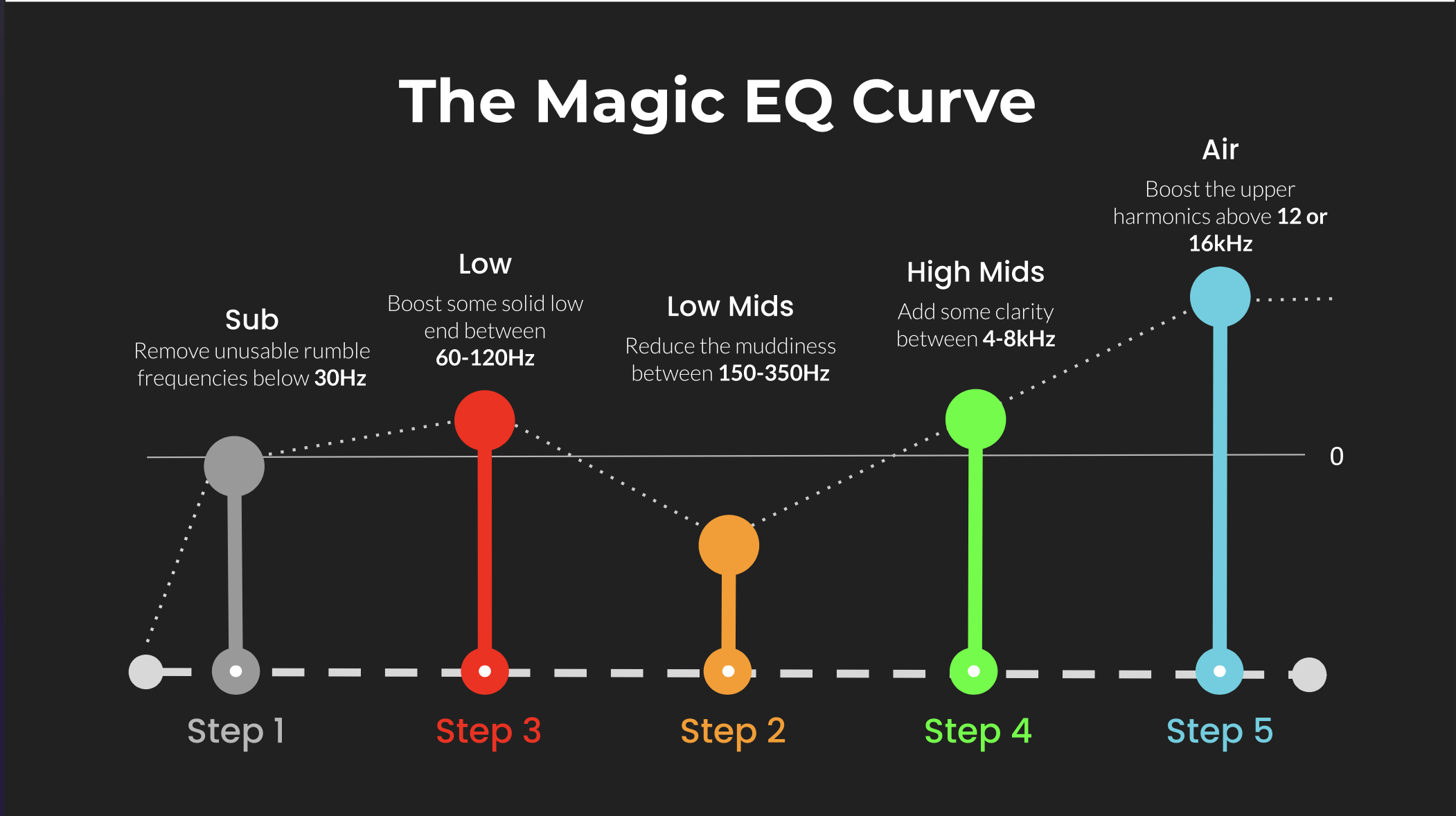 ⭐️ Download my Free Magic EQ settings Guide ⭐️

⭐️ Download my Free Magic Reverb settings Guide ⭐️
#protools #daw #homestudio #recordingschool #recording #musicproduction
Also read:
How to Start Your Own Online Business Teaching Music
Hey, I'm Futch - Music Production Coach and Ableton Certified Trainer

Learn how to make your first song and beat in Ableton Live with my
FREE 90-minute Ableton Live course
I've been teaching audio engineering and music production for 35 years.⭐️
Check out my new online music production program: Music Production Ninja...