How to Identify Every Instrument in a Song 🎧

You Hear the Song. Not the Parts.
You put on your favourite song.
You love it.
You know every word.
Then someone asks:
"What's the second guitar doing in the chorus?"
Second guitar?
You never noticed it.
It was there the whole time.
Most people hear a song as one big sound.
Producers hear it as a stack of parts.
Is that a gift you're born with?
No.
Is it a skill you can practise?
Yes.
Quick Summary
To identify every instrument in a song, listen in layers:
👉 Low, middle, high — which parts live in which range?
👉 Left, centre, right — where does each part sit?
👉 Front and back — what's close and what's far away?
👉 The job — is it rhythm, harmony, melody or ear candy?
Listen to one layer at a time.
Then put the song back together.
That's active listening.
1. 🎧 Get Ready to Listen
Use good headphones.
Not your phone speaker.
Not the TV in the kitchen.
Turn it up to a comfortable level.
Not loud.
Loud hides detail.
Pick a song you know well.
Your ears already know the map.
Now you're going to read it.
2. 🔊 Low, Middle, High
Start at the bottom.
Low
Kick drum.
Bass guitar.
Synth bass.
Sub.
Middle
Vocals.
Guitars.
Piano.
Snare.
Pads.
High
Hi-hats.
Cymbals.
Shakers.
Strings up high.
The air on the vocal.
Listen to the whole song once for only the low end.
Then once for the middle.
Then once for the top.
Three passes.
Three different songs.
Also read: DAW EQ: The 7 Frequency Bands 🎛️
3. ↔️ Left, Centre, Right
Now listen for where each part sits.
The kick, bass, snare and lead vocal usually sit in the centre.
Guitars, keys and backing vocals often sit left and right.
Try this:
Take off one side of your headphones.
What disappeared?
Now switch sides.
What disappeared this time?
You just found the parts that were hiding in the stereo.
Also read: The Illusion of Space: How Mix Engineers Trick Your Ears 🎧
 ⭐️ Download my Free Music Production Guides or take my free Ableton Live Course ⭐️
4. 🌫️ Front and Back
Some parts sound close.
Like they're in the room with you.
Some sound far away.
Like they're down the hall.
Close usually means louder, brighter and drier.
Far usually means quieter, darker and more reverb.
The lead vocal is almost always in front.
The pad is often in the back.
Depth is part of the arrangement.
5. 🧩 What's Its Job?
Every part in a song has a job.
Rhythm
Drums, percussion, strummed guitar, the bass.
Harmony
Piano, pads, chords on guitar, backing vocals.
Melody
The lead vocal, a lead synth, a guitar solo, a hook.
Ear Candy
The little sounds that show up once.
A reverse cymbal.
A vocal chop.
A riser before the chorus.
When you hear a new sound, ask:
What's this part doing for the song?
Also read: Music Systems: The Sections of an Orchestra 🎼
⚔️ Instrument Families Compared
| Family | Where It Lives | Usual Job |
|---|---|---|
| Drums and percussion | Low and high | Rhythm |
| Bass | Low | Rhythm and harmony |
| Guitars and keys | Middle | Harmony |
| Vocals | Middle, in front | Melody |
| Pads and strings | Middle and high, in back | Harmony and mood |
| FX and ear candy | Anywhere | Surprise |
Also read: What's the Difference Between a Sampler and a Synthesizer? 🎹
⚖️ Too Much vs. Too Little
Listen too hard...
And you stop enjoying music.
Every song turns into homework.
Listen too lightly...
And you only ever hear the vocal.
Just right:
Listen for fun first.
Then listen like a producer.
🥷 Make a Map of the Song
Pick one song this week.
Step 1
Listen three times: low, middle, high.
Write down every part you hear.
Step 2
Listen again with one side of your headphones off.
Then the other.
Add what you find.
Step 3
Next to each part, write its job.
Rhythm.
Harmony.
Melody.
Ear candy.
Now you have a map.
Next time you build a song in Ableton Live, use the map.
Same parts.
Same jobs.
Your song.
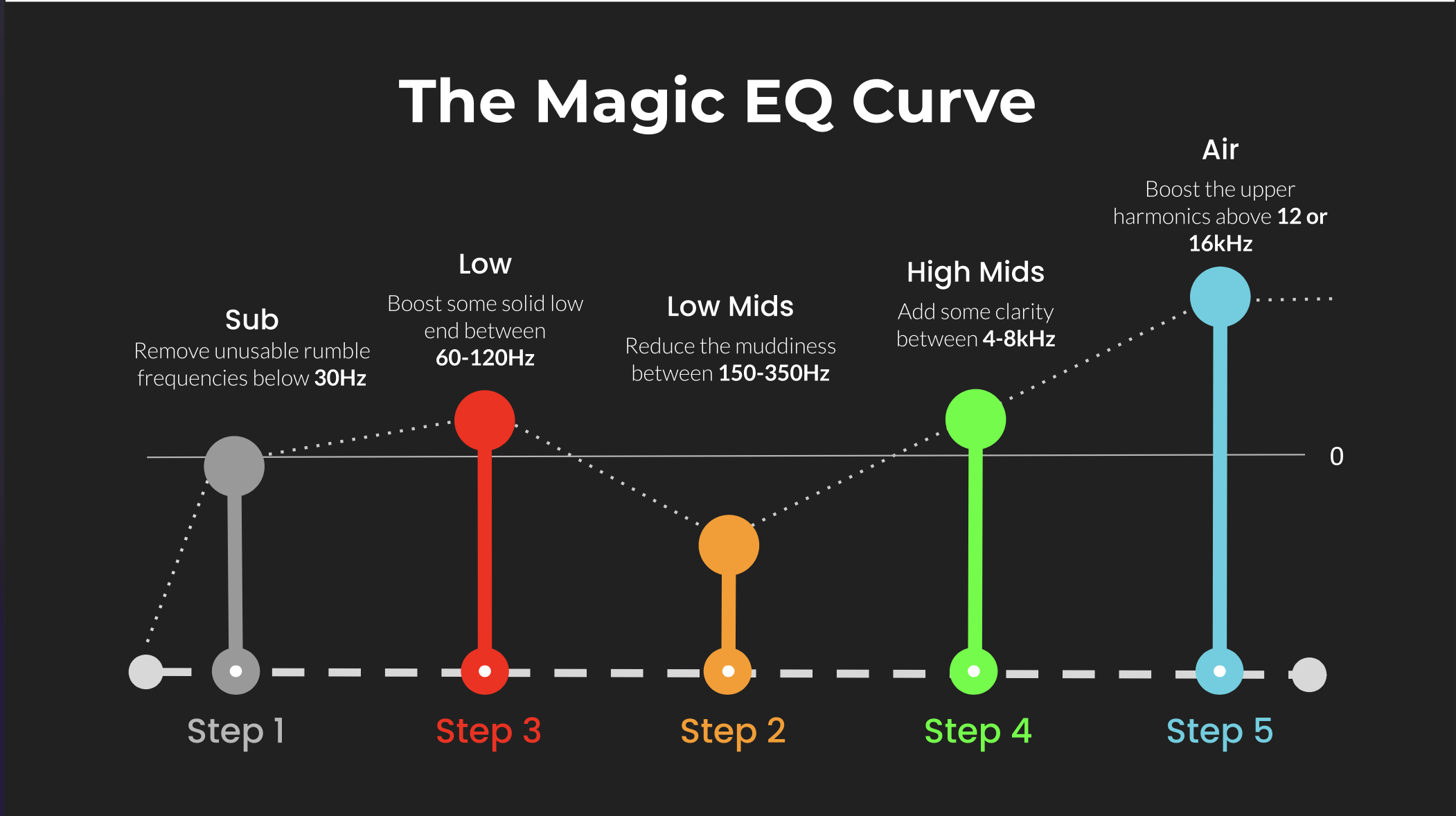 ⭐️ Download my Free Magic EQ settings Guide ⭐️

⭐️ Download my Free Magic Reverb settings Guide ⭐️
#protools #daw #homestudio #recordingschool #recording #musicproduction
Also read:
How to Start Your Own Online Business Teaching Music

Hey, I'm Futch - Music Production Coach and Ableton Certified Trainer

Learn how to make your first song and beat in Ableton Live with my
FREE 90-minute Ableton Live course
I've been teaching audio engineering and music production for 35 years.⭐️
Check out my new online music production program: Music Production Ninja...