Audio Processing: How Attack and Release Time Works

Attack and Release Are About Time
A compressor sees a sound get too loud.
Now it has two decisions to make:
How quickly should I react?
And...
How quickly should I let go?
That's attack and release.
And once you understand those two controls...
Compressors.
Limiters.
Expanders.
Gates.
They all become much easier to understand.
Quick Summary
Most dynamics processors revolve around five controls:
Threshold — When does it start working?
Ratio — How much does it work?
Attack — How quickly does it react?
Release — How quickly does it stop reacting?
Output — How loud is the result?
The first two determine what happens.
Attack and release determine when it happens.
Also read: Mastering Compression: A Guide to Using a DAW Compressor
🎚️ The 5 Main Dynamic Processors
Dynamic processors change a sound depending on its level.
There are five main types.
Compressor
Turns loud signals down.
Makes dynamics smaller.
Limiter
A very aggressive compressor designed to stop peaks from getting above a certain level.
Creates a ceiling.
Expander
Makes quiet sounds quieter.
Makes dynamics bigger.
Gate
Turns a signal down—or effectively off—when it falls below the threshold.
Opens and closes the door.
De-Esser
Reduces harsh vocal sounds like:
S.
SH.
T.
Why Do My High Frequencies Sound Harsh? 🤯
🎛️ The 5 Main Controls
Most compressors, limiters, expanders and gates use some combination of the same controls.
** A de-esser is essentially a frequency-sensitive dynamics processor, so its controls often look different from a traditional compressor.**
1. 🚪 Threshold
Threshold tells the processor:
When should I start working?
On a compressor...
The signal gets louder than the threshold.
Compression begins.
On a gate...
The signal drops below the threshold.
The gate starts closing.
Think of threshold as the trigger point.
2. ⚖️ Ratio
Ratio determines:
How much should happen?
A low compressor ratio like:
2:1
Is gentle.
A higher ratio like:
10:1
Is much stronger.
A limiter uses an extremely high ratio to prevent the signal from moving much beyond its ceiling.
3. ⚡ Attack
Attack determines:
How quickly does the processor react?
Fast attack:
React immediately.
Slow attack:
Wait before reacting.
This sounds simple.
But it can completely change the character of a sound.
4. 🕐 Release
Release determines:
How quickly does the processor return to normal?
Fast release:
Let go quickly.
Slow release:
Keep working longer.
Release controls what happens after the sound crosses back past the threshold.
5. 🔊 Output
Compression often turns the signal down.
Output—or makeup gain—lets you bring the overall level back up afterwards.
This helps you compare:
Before.
And...
After.
At roughly the same volume.
Also read: How Do I Get My Bass & Kick To Work Together in a Mix?
⚡ Attack: Fast, Medium or Slow?
Attack controls the beginning of the sound.
Especially the:
Transient.
The transient is the initial impact.
The crack of a snare.
The pick of a guitar.
The consonant at the beginning of a vocal.
Fast Attack
The processor reacts almost immediately.
This can smooth:
- Sharp drums
- Aggressive vocals
- Spiky bass
- Uncontrolled peaks
But be careful.
A very fast compressor attack can remove the transient.
Your snare goes from:
CRACK!
To:
thud.
Your kick loses punch.
Your guitar loses pick attack.
Fast attack is powerful...
Because it can actually change the shape of the sound.
Medium Attack
This is often a useful middle ground.
The initial transient gets through...
Then the processor takes control.
Great for:
- Vocals
- Bass
- Acoustic guitar
- Drums
- General compression
You keep some life...
While gaining consistency.
Slow Attack
A slow attack intentionally lets more of the beginning through.
This can add:
Punch.
Impact.
Definition.
Great for:
- Kick
- Snare
- Percussion
- Bass
- Rhythmic instruments
Slow attack can make a drum feel more aggressive, even though you're compressing it.
Why?
Because the transient escapes before the compressor clamps down.
 ⭐️ Download my Free Music Production Guides or take my free Ableton Live Course ⭐️
🕐 Release: Fast, Medium or Slow?
Release controls what happens after the processor reacts.
Think of it as:
How long should I hold on?
Fast Release
The processor lets go quickly.
Great for:
- Fast drums
- Percussion
- Rhythmic bass
- Energetic material
The processor resets quickly enough to react to the next sound.
But too fast can create:
Pumping.
Distortion.
Chatter.
Unnatural level changes.
Medium Release
Often the safest starting point.
The processor has time to work...
But returns naturally before the next important musical event.
Great for:
- Vocals
- Bass
- Guitars
- Mix bus compression
- General dynamics control
If you're unsure...
Start somewhere in the middle.
Then listen.
Slow Release
The processor keeps working long after the original peak has passed.
This can create:
Smoothness.
Density.
Glue.
Consistency.
Great for:
- Sustained vocals
- Pads
- Mix bus compression
- Slow musical passages
But this is another setting to treat carefully.
A release that is too slow means the processor may still be working when the next note arrives.
Now the compressor never really lets go.
The result can feel:
Flat.
Small.
Dull.
Over-controlled.
Also read: Mix Bus Compression: SSL Bus Compressor vs API 2500
🥁 Example: Snare Drum
Imagine compressing a snare.
Fast Attack
Crack disappears.
The snare becomes softer and rounder.
Medium Attack
Some crack survives.
The body becomes more controlled.
Slow Attack
CRACK!
The transient passes through before compression grabs the body.
Same compressor.
Completely different drum.
🎤 Example: Vocal
A vocal has different needs.
You might use:
Medium Attack
Let consonants and articulation survive.
Then control the louder body of the words.
Medium Release
Let the compressor recover naturally between phrases.
Too fast...
And the vocal may pump.
Too slow...
And one loud word can keep the next quiet word compressed.
🚪 Gates Use Attack and Release Too
Imagine gating a snare microphone.
Fast Attack
The gate opens immediately.
You hear the full transient.
Slow Attack
The gate may open too late...
And chop off the beginning of the snare.
Release determines how quickly it closes.
Fast Release
Short.
Tight.
Controlled.
Slow Release
More sustain.
More room.
More cymbal bleed.
Again...
Attack and release aren't just technical controls.
They shape the sound.
⚖️ Think Fast vs. Slow
You don't need to memorize perfect numbers.
Listen for the extremes.
Attack
Too Fast ←→ Too Slow
Too fast can remove the transient.
Too slow may let too much peak through.
Release
Too Fast ←→ Too Slow
Too fast can sound nervous or distorted.
Too slow can flatten the next sound.
Then find:
Just right.
🐻 The Goldilocks Method
Start in the middle.
Then deliberately go too far.
Make the attack extremely fast.
Listen.
Make it extremely slow.
Listen again.
Now move between them.
Do the same with release.
This makes the difference obvious.
You're not memorizing milliseconds.
You're learning what time sounds like.
🥷 Attack Shapes the Beginning. Release Shapes What Comes Next.
Threshold and ratio usually get most of the attention.
But attack and release often determine whether dynamics processing sounds:
Natural.
Punchy.
Smooth.
Aggressive.
Or completely wrong.
Remember:
Attack = How quickly do I react?
Release = How quickly do I let go?
And be especially careful with:
Very fast attack.
And...
Very slow release.
Both can dramatically reshape the original performance.
Sometimes that's exactly what you want.
Sometimes you've accidentally compressed the life out of it.
Find the extremes.
Then find the balance.
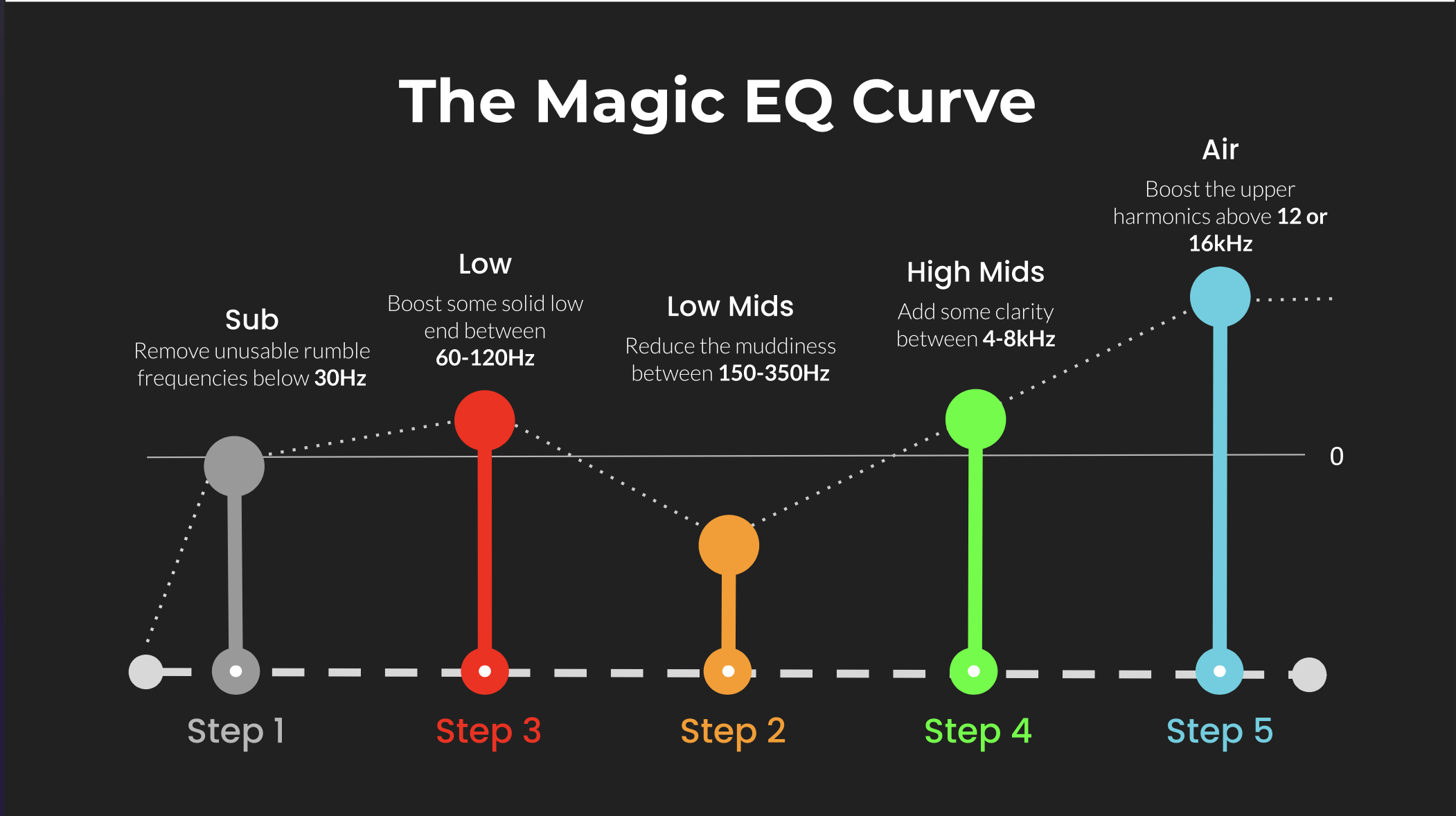 ⭐️ Download my Free Magic EQ settings Guide ⭐️

⭐️ Download my Free Magic Reverb settings Guide ⭐️
#protools #daw #homestudio #recordingschool #recording #musicproduction
Also read:
How to Start Your Own Online Business Teaching Music

Hey, I'm Futch - Music Production Coach and Ableton Certified Trainer

Learn how to make your first song and beat in Ableton Live with my
FREE 90-minute Ableton Live course
I've been teaching audio engineering and music production for 35 years.⭐️
Check out my new online music production program: Music Production Ninja...