Why Does My Kick Not Cut Through?

Your Kick Is Loud.
But You Still Can't Hear It.
You turn it up.
Still buried.
You add more bass.
Now the mix gets muddy.
You add more compression.
Now it sounds smaller.
The problem is often not the kick itself.
It is everything fighting for the same space around it.
A kick needs:
Low end for weight.
And...
Midrange attack for clarity.
Then everything else needs to get out of the way.
How to Gain Stage Properly in a DAW (And How to Break the Rules) 🎚️
Quick Summary
If your kick is getting lost:
👉 Remove unnecessary mud.
👉 Add clarity where the attack lives.
👉 Control the dynamics with compression.
👉 Layer kicks carefully.
👉 Check phase when combining samples.
👉 Sidechain the bass so the kick gets a moment to speak.
The goal is not always to make the kick louder.
The goal is to make it easier to hear.
1. 🧹 Remove the Mud
A kick can have lots of low end...
And still sound weak.
Why?
Because too much energy can build up in the low-mids.
That creates:
Mud.
Cloudiness.
Boxiness.
A kick might have useful weight around the low frequencies...
But unwanted buildup higher up.
Try gently cutting the muddy area.
Often somewhere around:
150–350 Hz
Don't automatically remove it.
Listen first.
Sweep the EQ until the kick sounds:
Cleaner.
Tighter.
More focused.
Sometimes subtracting a few dB makes the kick feel bigger.
2. 🔦 Boost the Clarity
The low frequencies give the kick weight.
But they don't always help it cut through a busy mix.
The attack of the kick usually lives higher.
This is the part that helps you hear:
Click.
Snap.
Beater.
Try a gentle boost somewhere in the upper-midrange.
Often around:
2–5 kHz
A rock kick might need more beater attack.
An electronic kick might need less.
The idea is simple:
Low end makes you feel the kick.
Attack makes you hear it.
You usually need both.
3. 📉 Use Compression
Compression can help make a kick more consistent.
But it can also destroy it.
If the attack is too fast...
The compressor grabs the transient.
The kick becomes smaller.
Softer.
Less exciting.
Try a slightly slower attack.
Let the first part of the kick through...
Then control the body afterwards.
This can make the transient feel stronger without turning the kick up.
A faster release can help the compressor recover before the next kick hit.
But every song is different.
Listen for:
Punch.
Not numbers.
4. 🥁 Layer Two Kicks
Sometimes one kick cannot do everything.
You might want:
One kick for weight.
And another for attack.
For example:
Kick 1 = Low and deep.
Kick 2 = Short and bright.
Blend them together.
Now each layer has one job.
This can work incredibly well.
But there is one, potentially major, problem...
 ⭐️ Download my Free Music Production Guides or take my free Ableton Live Course ⭐️
5. 🌊 Check the Phase
Two good kick sounds can create one terrible kick.
If their waveforms are pulling in opposite directions...
They can cancel each other.
Instead of getting:
More kick.
You get:
Less kick.
Flip the polarity of one layer.
Does the low end get stronger?
Or weaker?
Then zoom in.
Look at the waveforms.
Try moving one sample slightly earlier or later.
You want the important parts of both waveforms moving together as much as possible.
Think of two people pushing a car.
If they both push in the same direction...
More power.
If one pushes forward while the other pushes backward...
They fight each other.
Layering only works when the layers cooperate.
The Cycle of Sound: 6 Ways to Measure Audio Waveforms
6. 🎸 Make Space in the Bass
Your kick may be perfectly fine.
The bass might simply be covering it.
Kick and bass often occupy the same part of the frequency spectrum.
That creates competition.
One solution is EQ.
Give each one a slightly different home.
Maybe the kick owns the deepest lows.
Maybe the bass sits slightly above it.
Or the opposite.
But there is another option:
Sidechain compression.
7. ⛓️ Sidechain the Bass to the Kick
Sidechain compression temporarily turns the bass down every time the kick hits.
Kick hits.
Bass ducks.
Kick finishes.
Bass returns.
It might only happen for a fraction of a second.
But that tiny space can make the kick suddenly feel much clearer.
This is common in:
- EDM
- House
- Hip-hop
- Pop
- Electronic music
It can be dramatic.
Or almost invisible.
You don't necessarily need the obvious pumping effect.
Sometimes 1–3 dB of gain reduction is enough.
The bass moves out of the way.
The kick speaks.
Then the bass comes back.
⚖️ Weight vs Clarity
A kick has two main jobs.
Weight
- Low frequencies
- Body
- Power
- Impact
Clarity
- Attack
- Click
- Definition
- Presence
Too much weight...
And the kick disappears into the bass.
Too much clarity...
And it sounds thin and clicky.
The goal is balance.
🥷 Don't Just Turn It Up
When your kick disappears...
Volume is usually the first thing you reach for.
Try something else first.
Remove the mud.
Find the attack.
Control the dynamics.
Layer carefully.
Check the phase.
Move the bass out of the way.
Then turn it up if you still need to.
Because a kick doesn't cut through just because it is louder.
It cuts through because the mix gives it space to exist.
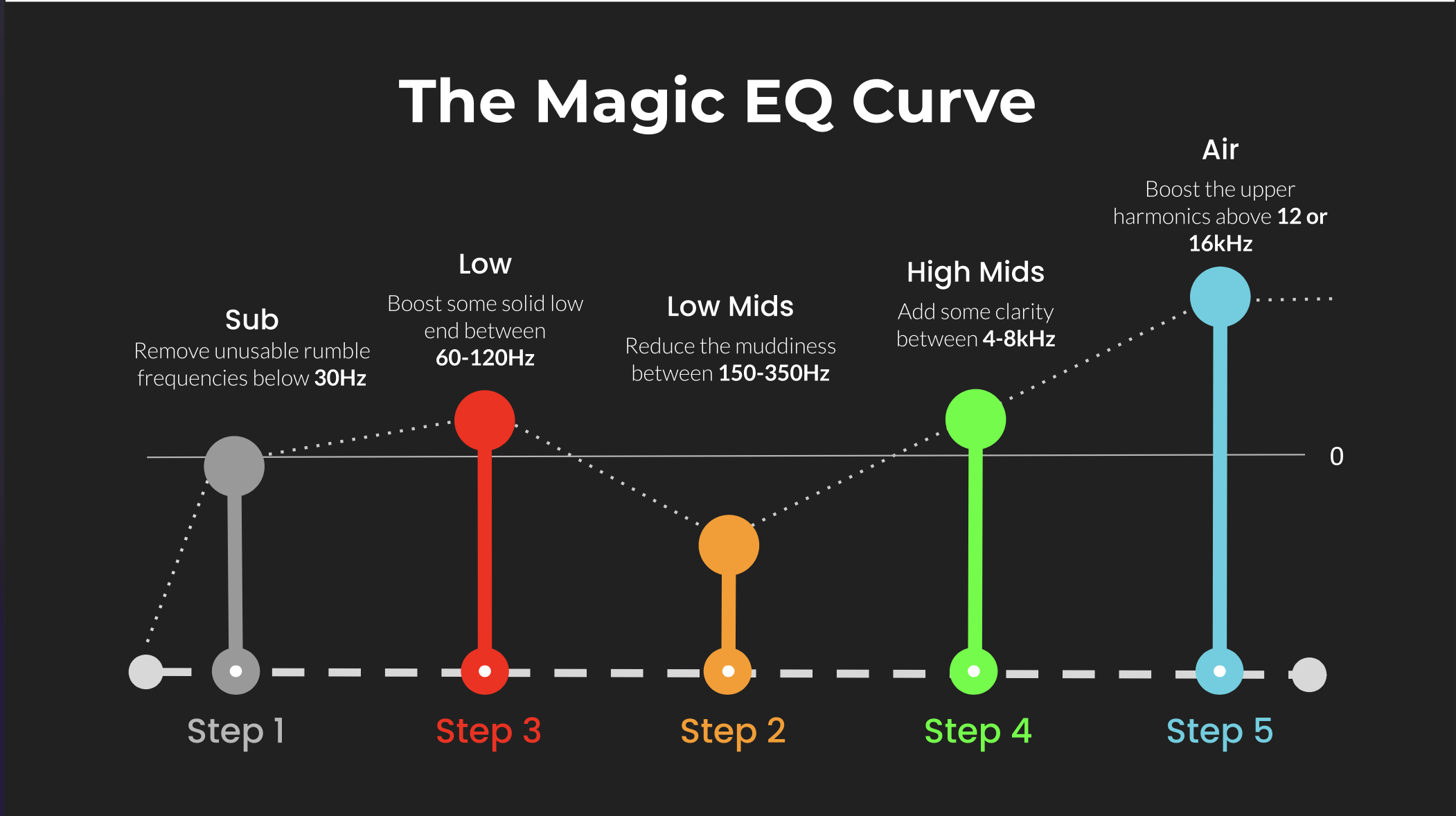 ⭐️ Download my Free Magic EQ settings Guide ⭐️

⭐️ Download my Free Magic Reverb settings Guide ⭐️
#protools #daw #homestudio #recordingschool #recording #musicproduction
Also read:
How to Start Your Own Online Business Teaching Music
Hey, I'm Futch - Music Production Coach and Ableton Certified Trainer

Learn how to make your first song and beat in Ableton Live with my
FREE 90-minute Ableton Live course
I've been teaching audio engineering and music production for 35 years.⭐️
Check out my new online music production program: Music Production Ninja...