What Is the Fourier Transform and How Is It Used in Audio Engineering? ∿
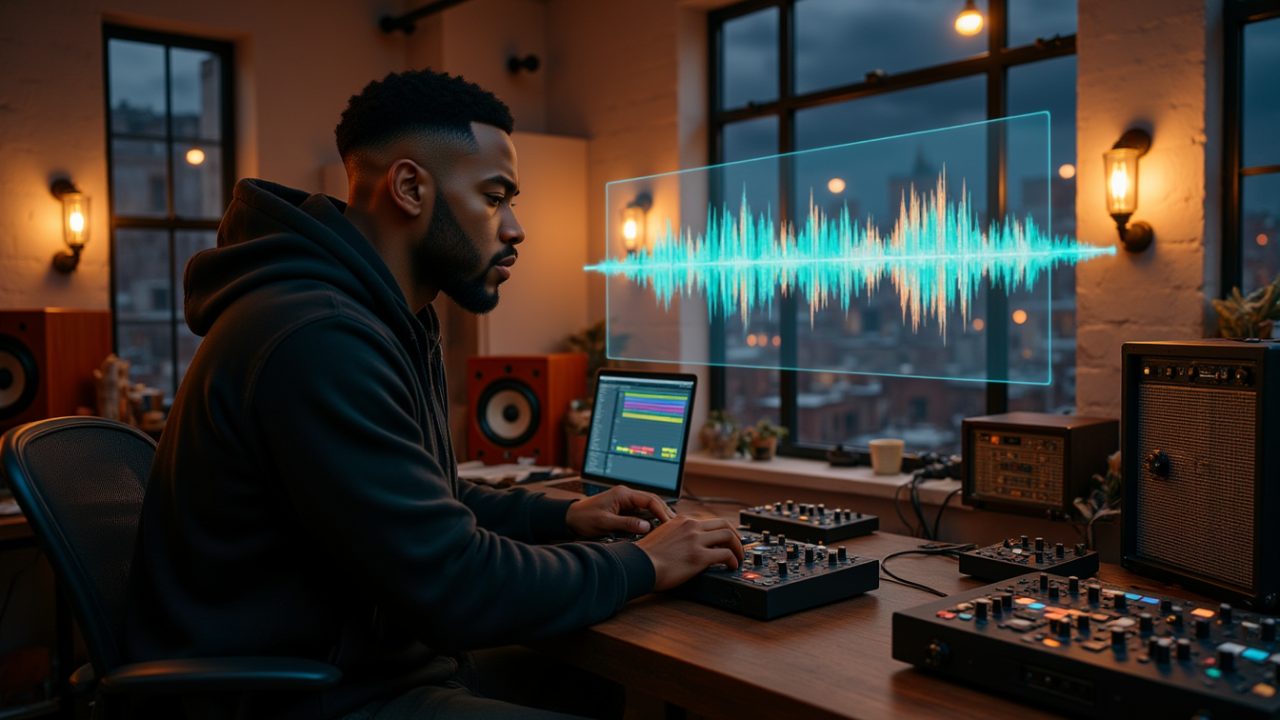
The Secret Decoder Ring of Audio
“Everything should be made as simple as possible, but not simpler.”
— Albert Einstein
Imagine you hear a chord played on a piano.
You hear:
- One sound
- One moment
- One musical event
But that's not what a computer hears.
A computer sees:
- Multiple frequencies
- Multiple harmonics
- Multiple amplitudes
All happening at the same time.
How does it figure that out?
The answer is one of the most important discoveries in mathematics, audio engineering, and signal processing:
The Fourier Transform.
Quick Summary
👉 The Fourier Transform is a mathematical process that takes a complex sound and breaks it into its individual frequencies. It allows computers to analyze, visualize, manipulate, and process audio. Modern EQs, spectrum analyzers, pitch correction, noise reduction, audio restoration, and many plugins rely on Fourier analysis.
What Is Sound? The Vibrational Chaos Behind Every Note 🌊
🎵 The Cake Analogy
Imagine you're eating a cake.
You know the cake exists.
But you want to know what's inside it.
You analyze it and discover:
- Flour
- Sugar
- Eggs
- Butter
- Chocolate
The cake becomes ingredients.
The Fourier Transform does exactly the same thing.
A sound might contain:
- Bass
- Midrange
- Treble
- Harmonics
- Noise
The Fourier Transform separates the ingredients.
The Fourier Transform is like a recipe analyzer for sound.
🎹 Who Was Fourier?
The Fourier Transform is named after:
Joseph Fourier
A French mathematician who lived in the early 1800s.
His revolutionary idea was:
Any complex signal can be built from simple sine waves.
At the time, this sounded almost impossible.
Today it's the foundation of modern audio technology.
🌊 Every Sound Is Made of Waves
Think about a simple sine wave.
It's the simplest sound possible.
Pure.
Smooth.
Perfect.
Now combine thousands of sine waves together.
You get:
- Pianos
- Guitars
- Vocals
- Drums
- Entire songs
The Fourier Transform works backwards.
Instead of combining waves...
It separates them.
Sound Theory 101: Energy, Frequency and Vibration
🎧 What Does It Actually Do?
Let's say a vocalist sings one note.
The Fourier Transform can identify:
- Fundamental frequency
- Harmonics
- Resonances
- Noise components
It converts:
Time Domain
(sound moving through time)
Into:
Frequency Domain
(sound separated into frequencies)
Think of it as switching between:
- A waveform view
- A spectrum analyzer
📈 The Spectrum Analyzer Example
Every DAW has some version of a spectrum analyzer.
Examples include:
- FabFilter Pro-Q
- SPAN
- Insight
- Logic Analyzer
When you see moving frequency graphs...
You're seeing Fourier analysis in action.
The analyzer is constantly asking:
"Which frequencies are present right now?"
And the Fourier Transform provides the answer.
🎛️ How EQ Uses Fourier Analysis
Modern digital EQs depend heavily on Fourier analysis.
When you boost:
100 Hz
The software must know where 100 Hz exists.
When you cut:
5 kHz
The software must locate those frequencies.
The Fourier Transform helps identify and manipulate them.
Think of EQ as:
Using the ingredient list to adjust the recipe.
Download The Magic EQ Settings that work on Everything!
🎤 Pitch Correction
Pitch correction software relies heavily on frequency detection.
Examples:
- Melodyne
- Auto-Tune
- MetaTune
- Waves Tune
These tools must determine:
- What note was sung
- Whether it's sharp or flat
- How much correction is needed
To do that, they analyze frequencies.
Which means...
Fourier is involved.
Without Fourier analysis, pitch correction wouldn't exist.
 ⭐️ Download my Free Music Production Guides or take my free Ableton Live Course ⭐️
🔇 Noise Reduction
Imagine removing:
- Air conditioner noise
- Hum
- Buzz
- Hiss
How does software know what to remove?
It analyzes the frequencies.
Examples:
- iZotope RX
- Cedar
- Waves Clarity
These tools identify unwanted frequency content and reduce it.
Once again:
Fourier analysis.
🛠️ Audio Restoration
Old recordings often contain:
- Clicks
- Pops
- Crackles
- Tape noise
Restoration software analyzes the signal and separates:
- Wanted audio
- Unwanted artifacts
This process relies heavily on frequency-domain processing.
Think of it as:
Finding a stain on a photograph and removing only the stain.
🎼 Time Stretching and Pitch Shifting
Ever slowed down audio without changing pitch?
Or changed pitch without changing speed?
That's another area where Fourier analysis helps.
Examples:
- Ableton Warp
- Elastic Audio
- Flex Time
- Melodyne
These tools analyze and manipulate frequency information independently.
🎵 MP3 Compression
One of the most surprising uses of Fourier analysis is MP3 encoding.
An MP3 doesn't simply shrink audio.
It removes information.
But not randomly.
It analyzes:
- Which frequencies humans hear well
- Which frequencies are masked
- Which information is less important
Then removes some of it.
That's why a 50 MB WAV file might become:
- 5 MB
- 3 MB
- Even smaller
Fourier helps MP3s decide what you probably won't miss.
DAW Overview: File Types & File Management
🎹 Spectral Processing
Many modern plugins now offer spectral processing.
Examples:
- iZotope RX
- SpectraLayers
- Gullfoss
- Soothe
These tools don't just process audio.
They process individual frequencies.
Almost like Photoshop for sound.
You can:
- Remove resonances
- Isolate sounds
- Separate vocals
- Repair recordings
All because the audio has been broken into its frequency ingredients.
🎛️ AI and Fourier
Even modern AI audio tools rely on frequency analysis.
Examples include:
- Stem separation
- Vocal isolation
- Noise reduction
- Audio enhancement
Many AI systems begin by converting audio into frequency information before processing it.
So even the newest AI tools are built upon ideas developed over 200 years ago.
🧠 Why Music Producers Should Care
You don't need to perform Fourier calculations.
Just like you don't need to understand engine design to drive a car.
But understanding the concept helps explain:
- EQ
- Compression analysis
- Pitch correction
- Spectrum analyzers
- Noise reduction
- Audio restoration
Once you understand Fourier analysis, many audio tools suddenly make much more sense.
🧠 A Simple Memory Trick
Imagine two views of the same city.
Waveform View
Shows:
- Time
- Shape
- Loudness
Like looking at the city from the side.
Frequency View
Shows:
- Bass
- Midrange
- Treble
- Harmonics
Like looking at the city from above.
The Fourier Transform is the helicopter that takes you from one view to the other.
🧠 FAQ
Q: What is the Fourier Transform?
A: A mathematical process that breaks complex sounds into individual frequencies.
Q: Why is the Fourier Transform important in audio?
A: It allows computers to analyze and manipulate frequency information.
Q: Does EQ use Fourier analysis?
A: Most modern digital EQs rely on Fourier-based concepts.
Q: Does Auto-Tune use Fourier analysis?
A: Yes. Pitch correction tools analyze frequencies to identify notes.
Q: What audio tools use the Fourier Transform?
A: EQs, spectrum analyzers, pitch correction, noise reduction, audio restoration, MP3 encoding, stem separation, and many AI audio tools.
🔑 Final Thought
The Fourier Transform may sound intimidating.
But its core idea is surprisingly simple.
Every sound is made of ingredients.
The Fourier Transform helps us see those ingredients.
Once we can see them...
We can:
- EQ them
- Tune them
- Compress them
- Remove them
- Enhance them
The waveform shows us what happened over time.
The Fourier Transform shows us what it's made of.
And almost every modern audio tool depends on that ability.
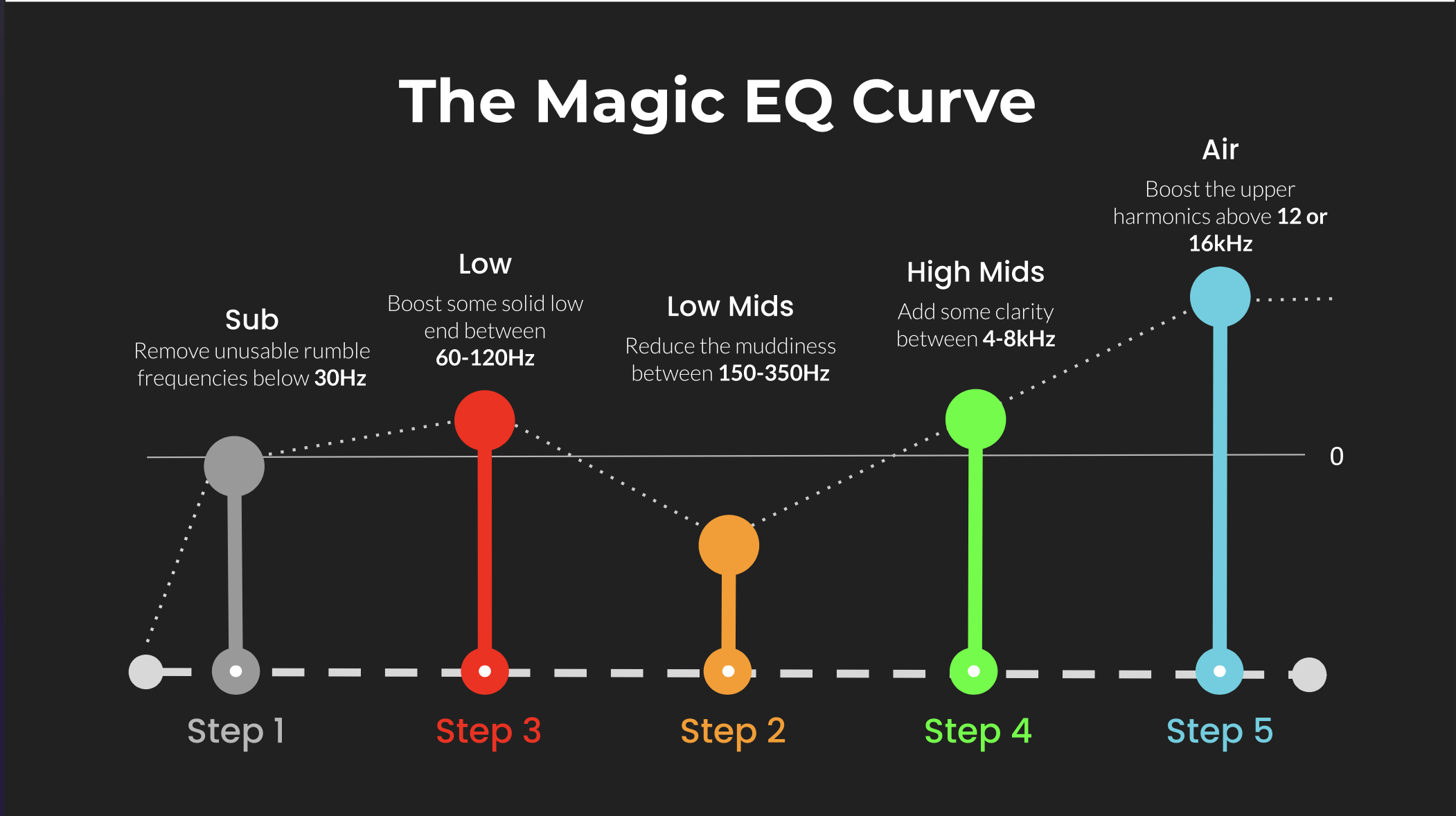 ⭐️ Download my Free Magic EQ settings Guide ⭐️

⭐️ Download my Free Magic Reverb settings Guide ⭐️
#protools #daw #homestudio #recordingschool #recording #musicproduction
Also read:
How to Start Your Own Online Business Teaching Music
Hey, I'm Futch - Music Production Coach and Ableton Certified Trainer

Learn how to make your first song and beat in Ableton Live with my
FREE 90-minute Ableton Live course
I've been teaching audio engineering and music production for 35 years.⭐️
Check out my new online music production program: Music Production Ninja...