The Kitchen Test: 10 Things That Decide If Your Song Lands 🍳

It Sounded Perfect in Your Studio
You finish the mix at midnight.
Good headphones.
Monitors you trust.
A room you know.
It sounds finished.
The next morning...
Someone plays it on a phone speaker in the kitchen.
The kettle is going.
People are talking.
And suddenly...
The song falls apart.
It's easy to blame the speaker.
But the speaker isn't the problem.
The kitchen is just the truth arriving early.
Is Music Production Too Technical For Singer-Songwriters?
Quick Summary
The Kitchen Test is simple:
👉 Play your song on a phone speaker in an ordinary room.
👉 Change one thing at a time.
👉 Five things can be changed immediately:
- Listener
- Version
- Song
- Device
- Room
👉 Five things are already baked into the recording:
- Performance
- Instrument sounds
- Arrangement
- Musical world
- Recording quality
The first five tell you what the situation is doing to your song.
The second five tell you what you did to your song.
🍳 How to Run the Kitchen Test
You need:
A kitchen.
A phone.
And about eight minutes.
Step 1
Play the song from across the room.
Don't stand over the speaker.
Step 2
Do something ordinary.
Make coffee.
Wash a plate.
Move around.
Step 3
Notice the first moment your attention leaves the song.
Step 4
Change one variable.
Play it again.
Step 5
Ask:
Did that moment change?
That's the test.
One variable at a time.
Otherwise...
You learn nothing.
Music Production for Beatmakers, Electronic Musicians, Musicians, and Singer Songwriters 🎛️
Part One: The Five Things You Can Swap
These can change in seconds.
Try them before touching the mix.
1. 👂 The Listener
Play the song for someone who didn't make it.
Don't explain it.
Don't tell them what to listen for.
Watch their reaction.
You have heard the song 200 times.
They have heard it once.
Ask one question:
What is this song about?
If they can't answer...
The problem may be bigger than the mix.
2. 🎚️ The Version
Play the rough mix.
Then play the finished mix.
Sometimes the rough has:
Energy.
Danger.
Emotion.
And the finished mix has:
Balance.
Polish.
Control.
Those are not always the same thing.
If the rough wins...
Ask what the mix accidentally removed.
3. 🎵 The Song
Play a record you love immediately after yours.
Same room.
Same speaker.
Similar volume.
This is uncomfortable.
And extremely useful.
You're not comparing loudness.
You're comparing:
Attention.
When did your song lose you?
When did the reference pull you back in?
Those moments tell you where to look.
4. 📱 The Device
Try:
Phone.
Laptop.
Earbuds.
Car.
Bluetooth speaker.
A phone gives you very little deep bass and almost no meaningful stereo width.
Your carefully designed low end might disappear.
Your wide reverb might disappear.
The question becomes:
Does the song still work without them?
If the vocal and main hook survive...
You're in good shape.
5. 🚪 The Room
Try:
Kitchen.
Bathroom.
Hallway.
Outside.
Every room adds its own sound.
A hard tiled kitchen already has reflections.
If your mix suddenly turns to mud...
You may have added too much ambience of your own.
Sometimes the room is doing your reverb's job.
 ⭐️ Download my Free Music Production Guides or take my free Ableton Live Course ⭐️
Part Two: The Five Things You Can't Swap
Now we get to the harder half.
These decisions are already inside the record.
No fader can completely undo them.
6. 🎸 The Performance
A bad room strips away distractions.
What remains is the performance.
Too much correction...
And the life disappears.
Too little preparation...
And the part never really arrived.
Try:
- Keeping longer complete takes
- Recording after the performer is warmed up
- Prioritizing emotion over microscopic perfection
A great performance survives bad speakers.
That's one of the easiest ways to recognize one.
7. 🔊 The Instrument Sounds
Not the mix.
The source.
The guitar tone.
The drum sound.
The synth patch.
The microphone position.
At one extreme:
Everything is huge.
Nothing has space.
At the other:
Everything is safe.
Nothing has identity.
Choose sounds before you rescue them.
A tone you chose on purpose usually beats one you repaired later.
8. 🧱 The Arrangement
Arrangement is where the song changes over time.
What enters?
What leaves?
How long is the intro?
What makes the chorus feel bigger?
Too much:
Everything plays from bar one.
The chorus has nowhere to go.
Too little:
The same loop plays for four minutes.
Try:
Removing something before the chorus.
Cutting the intro.
Moving the strongest idea earlier.
In a kitchen...
Arrangement still works.
9. 🌍 The World of the Song
Every song belongs somewhere.
A genre.
An era.
A feeling.
A reference point.
Too close to another record...
And it has no identity.
Too far away from anything familiar...
And the listener doesn't know how to hear it.
Try naming two records your song sits between.
Then make one choice that belongs to neither.
That's where identity starts.
10. 🎙️ The Recording
Some problems become permanent.
Noise.
Clipping.
Bad phase.
A weak take.
Poor tuning.
The wrong microphone position.
If the musician is still standing there...
Record it again.
Fix phase before reaching for EQ.
Fix the performance before reaching for editing.
Recording has one major difference from mixing:
It has a deadline.
Once everyone goes home...
Some decisions become facts.
Producer Types: From a Music Fan to a Music Producer ☯️
🥄 Too Much, Too Little, Just Right
Goldilocks works here too.
Too Much
You test every bounce.
Change six things.
Chase the phone speaker.
Eventually the song sounds thin everywhere.
Too Little
You never leave the studio.
The song only works in the one room designed to make it sound good.
Just Right
Run the Kitchen Test three times:
1. After the arrangement is locked
2. After the rough mix
3. Before the song is finished
One variable at a time.
One written observation each time.
That's enough.
📋 The Ten at a Glance
| # | Factor | Swappable? | What It Reveals |
|---|---|---|---|
| 1 | Listener | Yes | Does the song communicate? |
| 2 | Version | Yes | Did the mix beat the rough? |
| 3 | Song | Yes | Where does attention disappear? |
| 4 | Device | Yes | Does the hook survive? |
| 5 | Room | Yes | Is the mix too ambient? |
| 6 | Performance | No | Is there something worth mixing? |
| 7 | Instrument sounds | No | Did you choose or rescue the tone? |
| 8 | Arrangement | No | Does the song actually move? |
| 9 | Musical world | No | Does the listener know what this is? |
| 10 | Recording | No | What is now permanent? |
🥷 Stop Mixing the Problem
A phone speaker in a kitchen isn't a worse version of your studio.
It's closer to where your song will actually live.
Five things can be changed right now.
The other five need to be changed earlier next time.
That's the shift.
Don't wait until mixing to solve every problem.
Choose better.
Earlier.
On purpose.
Because if a song only works in your studio...
It isn't finished.
It's comfortable.
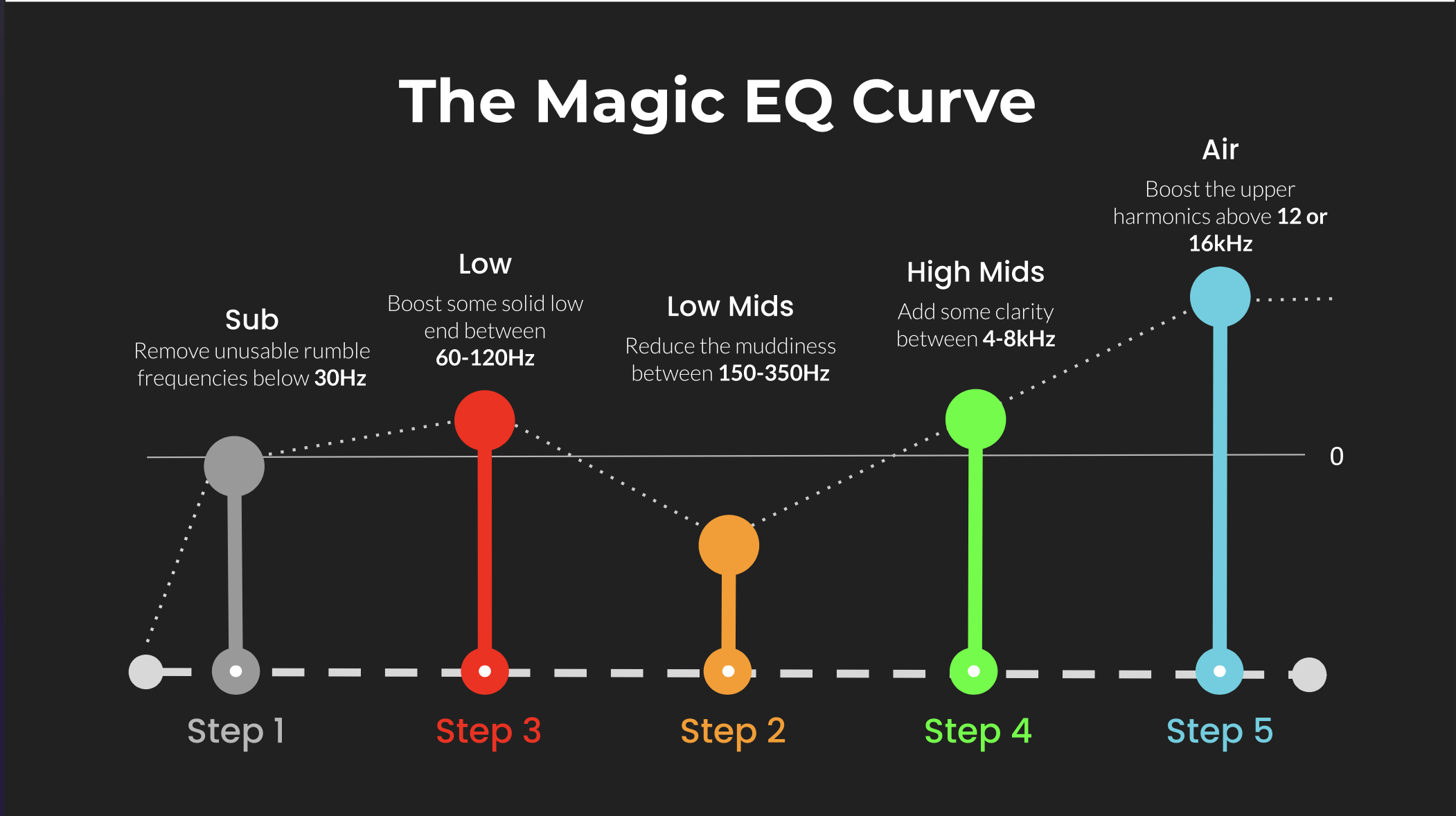 ⭐️ Download my Free Magic EQ settings Guide ⭐️

⭐️ Download my Free Magic Reverb settings Guide ⭐️
#protools #daw #homestudio #recordingschool #recording #musicproduction
Also read:
How to Start Your Own Online Business Teaching Music

Hey, I'm Futch - Music Production Coach and Ableton Certified Trainer

Learn how to make your first song and beat in Ableton Live with my
FREE 90-minute Ableton Live course
I've been teaching audio engineering and music production for 35 years.⭐️
Check out my new online music production program: Music Production Ninja...