What’s New in Harrison Mixbus 12? 🎚️

The DAW That Wants to Be a Console
“The medium is the message.”
— Marshall McLuhan
Most DAWs begin with a blank timeline.
Then you build your studio.
Add an EQ.
Add a compressor.
Create buses.
Add tape saturation.
Build a console one plugin at a time.
Harrison Mixbus takes the opposite approach.
The console is already there.
Every track enters a mixing environment inspired by Harrison’s analog desks, with channel processing, bus compression, tape-style saturation, and a knob-per-function workflow built into the DAW itself.
Mixbus 12 keeps that identity intact.
But it adds more vocal processing, better clip launching, stronger MIDI tools, and several workflow improvements designed to make it feel like a more complete production system.
Pro Tools vs Harrison Mixbus: What’s the Difference?
Quick Summary
👉 Harrison Mixbus 12 adds a DeEsser and DeNoiser to every channel strip, expands its cue system to 16 rows, allows audio and MIDI recording directly into cue slots, improves the piano roll, adds processing-chain templates, introduces a darker interface, and improves scrolling and Focus Channel management. It remains best suited to producers who want a traditional console-style recording and mixing workflow with analog character already built in.
🎚️ What Is Harrison Mixbus?
Harrison is known for large-format recording and film mixing consoles.
Its desks have been associated with recordings by artists including:
- Michael Jackson
- Queen
- ABBA
- Led Zeppelin
- Genesis
- Steely Dan
Mixbus brings that console heritage into a DAW.
Instead of treating the mixer as a neutral collection of empty channels, Mixbus gives every track immediate access to Harrison-style processing.
That includes:
- 32C EQ
- Filters
- Compression
- Gating
- Mixbus sends
- Analog-inspired saturation
The buses also include tone controls, compression, and tape-style saturation.
Harrison Mixbus vs UAD Luna: Analog Studio Workflow DAWs
Mixbus doesn’t ask you to build an analog workflow.
It starts you inside one.
🆕 What’s New in Mixbus 12?
Mixbus 11 was a major redesign.
It introduced:
- Dedicated Cue, Record, Edit, and Mix pages
- The Focus Channel
- A new transport and Locator Bar
- Per-region effects
- A dedicated piano roll
- Improved touch support
- A gate on every channel
- SSL 9000 J processing and Dolby Atmos in Mixbus Pro
Mixbus 12 builds on that foundation rather than replacing it.
The new version focuses on three areas:
- More processing
- Better music creation
- Faster workflow
🎤 1. DeEsser and DeNoiser on Every Channel
The biggest mixing addition is the new built-in:
- DeEsser
- DeNoiser
Both are available directly on every channel strip.
DeEsser
The DeEsser helps control:
- Vocal sibilance
- Harsh cymbals
- Bright acoustic guitars
- Sharp percussion
Instead of loading a separate plugin on every vocal track, the control is already part of the console.
DeNoiser
The DeNoiser helps reduce:
- Room noise
- Amplifier hiss
- Air conditioning
- Background noise
- Unwanted recording artifacts
Harrison says these processors draw from its experience designing large motion-picture consoles, bringing post-production-style noise control into the Mixbus channel strip.
Mixbus 12 makes cleanup part of the console instead of an extra step.
🎛️ 2. Expanded Cue Performance Tools
Mixbus already had a cue-based clip-launching workflow.
Version 12 expands it.
You can now work with up to:
16 cue rows
You can trigger audio or MIDI clips manually, launch them automatically from the timeline, and record new audio or MIDI directly into cue slots.
This makes Mixbus more useful for:
- Loop-based writing
- Electronic music
- Live arrangement
- Building song sections
- Experimenting before committing to the timeline
Why This Matters
Traditionally, Mixbus has been known more for recording and mixing than spontaneous electronic music creation.
The expanded Cue page moves it slightly closer to the non-linear workflows found in DAWs like Ableton Live.
It still isn’t trying to become Ableton.
But it gives producers more ways to begin.
The console now has a sketchbook attached to it.
🎹 3. Better MIDI and Piano Roll Tools
Mixbus 12 adds a wider range of improvements to its MIDI piano roll and clip editor.
That matters because MIDI has historically been one of the areas where console-focused DAWs can feel less developed than Logic, Cubase, Ableton, or FL Studio.
The improved piano roll makes it easier to:
- Program drums
- Edit notes
- Quantize performances
- Control virtual instruments
- Refine MIDI clips
Mixbus is still primarily attractive for audio recording and mixing.
But version 12 becomes more capable as an all-in-one songwriting and production environment.
The Alt Digital Audio Workstations: A Tale of 5 ½ More DAWs
⚡ 4. Processing-Chain Templates
Mixbus 12 lets you save favorite processing chains as templates.
For example, you could save:
Lead Vocal Chain
- DeNoiser
- 32C EQ
- Compressor
- DeEsser
- Saturation
Drum Chain
- Gate
- EQ
- Compression
- Bus routing
Bass Chain
- Filter
- Compression
- Tape saturation
Then recall the entire setup on another track or project.
Your favorite sound can become a repeatable system.
This is one of the most practical additions in Mixbus 12 because it helps producers create consistency across sessions.
🌑 5. A Darker Interface
Mixbus 12 introduces a darker default color scheme intended to reduce visual fatigue during long sessions.
That may sound like a small change.
But producers can spend:
- Four hours editing
- Eight hours mixing
- Twelve hours finishing a record
A darker interface can make the environment feel calmer and easier on the eyes.
The overall identity still resembles a large recording console.
It just feels slightly more modern.
🖱️ 6. Better Scrolling and Navigation
Version 12 adds new vertical and horizontal scrolling tools and a collapsible Focus Channel view.
These improvements help when working with:
- Large sessions
- Smaller laptop screens
- Long arrangements
- Detailed automation
- Many tracks and buses
The Focus Channel remains one of Mixbus’s most useful features.
It places the selected track’s important processing controls in one focused area, including EQ, dynamics, and bus sends.
🎚️ Mixbus 12 vs Mixbus 11
The difference is simple.
Mixbus 11 Was the Redesign
It introduced the new structure:
- Cue
- Record
- Edit
- Mix
- Focus Channel
- Property Editor
- Dedicated piano roll
- Per-region effects
- New channel gate
Mixbus 12 Is the Refinement
It improves that system with:
- DeEsser and DeNoiser
- More cue rows
- Recording into cue slots
- Better MIDI
- Processing-chain templates
- Darker visuals
- Better scrolling
- Collapsible Focus Channel
Mixbus 11 rebuilt the studio.
Mixbus 12 improves how you work inside it.
💰 Mixbus 12 Pricing
At the time of writing, Harrison lists two editions:
Mixbus 12
$29.99 USD
Includes:
- Harrison console-inspired DAW
- 32C EQ and signal processing
- Gate on every channel
- Harrison XT plugin suite
Mixbus 12 Pro
$99.99 USD
Adds:
- Switchable SSL 9000 J EQ and dynamics
- Dolby Atmos immersive mixing tools
- The full standard Mixbus feature set
These prices make Mixbus unusually affordable compared with many professional DAWs.
 ⭐️ Download my Free Music Production Guides or take my free Ableton Live Course ⭐️
🎛️ Mixbus 12 vs Pro Tools
Pro Tools is built around professional recording, editing, session interchange, and large-scale studio workflows.
Avid positions it as an industry-leading platform for audio recording, editing, and mixing, with editions ranging from the free Pro Tools Intro to larger professional systems.
Pro Tools Is Stronger For
- Professional studio compatibility
- Detailed audio editing
- Vocal comping
- Post-production
- Large recording sessions
- Session exchange
- Working in commercial studios
Mixbus Is Stronger For
- Immediate console-style mixing
- Built-in analog character
- Knob-per-function processing
- Fast EQ and compression decisions
- Affordable ownership
- Producers who dislike building large plugin chains
The Main Difference
Pro Tools gives you the professional studio framework.
Mixbus gives you a particular console sound and workflow.
Pro Tools is the studio standard.
Mixbus is the studio personality.
Pro Tools tends to begin neutrally.
Mixbus begins with a point of view.
🌙 Mixbus 12 vs UAD LUNA
LUNA is another DAW inspired by classic analog studios.
Universal Audio describes LUNA as a free Mac and Windows DAW built around analog-studio sound, with optional console, tape, and summing extensions. It also includes newer tools such as ARA, Voice Control, tempo analysis, instrument detection, and deep Apollo integration.
So LUNA and Mixbus appear similar.
But they approach the analog studio idea differently.
LUNA
Build your studio from extensions.
You might add:
- API Vision Console
- Neve Summing
- API Summing
- Studer Tape
- Ampex Tape
LUNA is especially powerful when paired with Universal Audio Apollo hardware for low-latency recording through UAD plugins.
Mixbus
The Harrison console is the DAW.
The channel strip, saturation, buses, compression, and routing are already central to the experience.
The Simple Difference
LUNA
A customizable analog studio ecosystem.
Mixbus
A specific Harrison console workflow.
LUNA lets you assemble the studio.
Mixbus asks you to sit down at the desk.
🎼 Who Is Mixbus 12 For?
Mixbus 12 will not be the perfect DAW for everyone.
Its greatest strength is also its clearest limitation:
It has a strong personality.
Recording Engineers
A strong choice for engineers recording:
- Bands
- Drums
- Guitars
- Bass
- Vocals
- Acoustic instruments
The console layout makes balancing and processing recorded audio feel immediate.
Mix Engineers
This is probably the most obvious audience.
Mixbus is ideal for people who enjoy:
- Faders
- Buses
- Channel strips
- Console EQ
- Compression
- Tape saturation
Instead of opening a different plugin for every decision, many of the essential tools are already visible.
Rock, Soul, Jazz, Country, and Live Music Producers
Mixbus may be especially appealing for productions built around performances rather than programming.
Think:
- Live drums
- Electric guitars
- Real bass
- Acoustic instruments
- Large vocal sessions
Its console-inspired character naturally fits styles that benefit from warmth, weight, and cohesion.
Dub and Electronic Producers Who Love Hardware Workflows
The Cue page, bus architecture, saturation, filters, delays, and hands-on console approach could also appeal to producers who create:
- Dub
- Dub Techno
- House
- Ambient
- Experimental electronic music
Especially those who treat the mixer itself as an instrument.
MIDI-First Beatmakers
Mixbus 12 is more capable than previous versions.
But producers who live almost entirely inside:
- Piano rolls
- Step sequencers
- Pattern systems
- Virtual instruments
may still prefer Ableton Live, Logic Pro, FL Studio, Cubase, or Bitwig.
⚖️ Pros and Cons
Pros
- Harrison 32C processing on every channel
- Analog console-inspired workflow
- Built-in bus saturation and compression
- New DeEsser and DeNoiser
- Expanded cue launching
- Improved MIDI tools
- Processing-chain templates
- Affordable pricing
- Mixbus Pro includes SSL 9000 J processing and Atmos tools
Cons
- More opinionated than a neutral DAW
- MIDI still may not match dedicated composition-focused platforms
- Smaller community than Pro Tools or Logic
- Less common in commercial studio handoff workflows
- Analog-console emulation can require more CPU than a typical neutral DAW workflow
🏆 Which DAW Should You Choose?
Choose Pro Tools If You Want
- Industry compatibility
- Deep editing
- Commercial studio workflows
- Post-production
- Large professional sessions
Choose UAD LUNA If You Want
- A free entry point
- Apollo integration
- UA tape, summing, and console extensions
- Modern assistive features
- A customizable analog studio ecosystem
Choose Mixbus 12 If You Want
- A complete Harrison console from the beginning
- Fast mixing decisions
- Built-in analog character
- Affordable ownership
- A DAW that encourages you to mix with your ears
🧠 FAQ
Q: What is new in Harrison Mixbus 12?
A: Mixbus 12 adds a DeEsser and DeNoiser to every channel, expands cue launching to 16 rows, allows audio and MIDI recording into cue slots, improves MIDI editing, adds processing-chain templates, and introduces several interface and navigation refinements.
Q: What is the difference between Mixbus 11 and Mixbus 12?
A: Mixbus 11 introduced the redesigned workflow and Focus Channel. Mixbus 12 expands and refines that system with new processing, cue, MIDI, template, and interface features.
Q: Is Mixbus 12 better than Pro Tools?
A: Not objectively. Pro Tools is better suited to professional compatibility and detailed editing, while Mixbus offers a more immediate analog console sound and workflow.
Q: Is Mixbus similar to UAD LUNA?
A: Yes. Both are inspired by analog studios. LUNA builds its sound through optional console, summing, and tape extensions, while Mixbus places Harrison processing at the center of every session.
Q: Is Mixbus 12 good for beginners?
A: It can be, especially for beginners who want to understand traditional consoles, buses, EQ, compression, and signal flow.
🔑 Final Thought
Most DAWs try to give you every possible option.
Mixbus gives you a direction.
A Harrison channel strip.
A Harrison bus system.
A Harrison mixing philosophy.
Version 12 doesn't abandon that identity.
It strengthens it.
Better cleanup.
Better cue launching.
Better MIDI.
Faster recall.
A calmer interface.
Pro Tools gives you a professional language.
LUNA gives you an analog studio ecosystem.
Mixbus gives you a console and asks you to start mixing.
For producers who love recording musicians, shaping tone, riding faders, and committing to decisions...
That may be exactly the point.
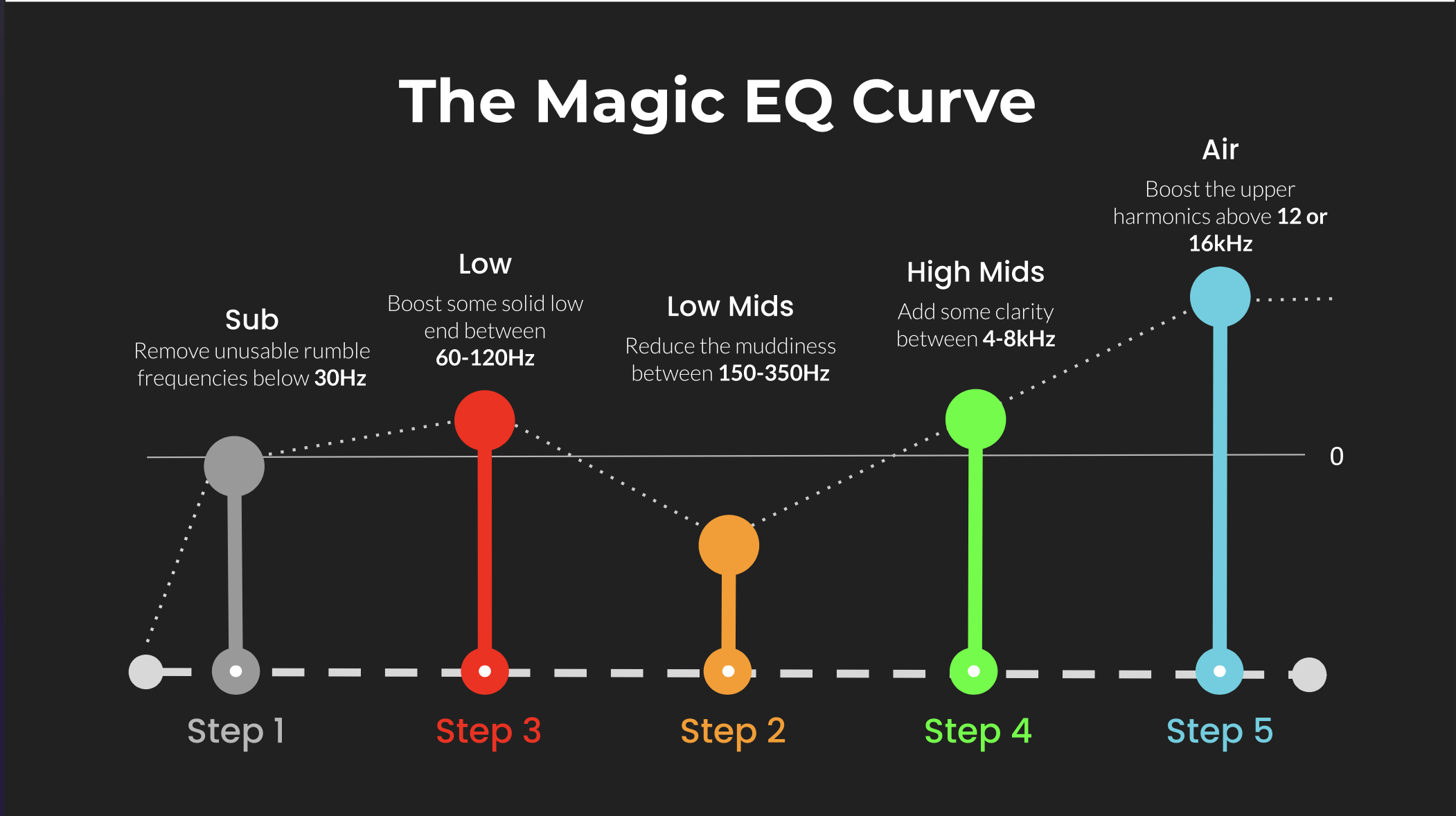 ⭐️ Download my Free Magic EQ settings Guide ⭐️

⭐️ Download my Free Magic Reverb settings Guide ⭐️
#protools #daw #homestudio #recordingschool #recording #musicproduction
Also read:
How to Start Your Own Online Business Teaching Music

Hey, I'm Futch - Music Production Coach and Ableton Certified Trainer

Learn how to make your first song and beat in Ableton Live with my
FREE 90-minute Ableton Live course
I've been teaching audio engineering and music production for 35 years.⭐️
Check out my new online music production program: Music Production Ninja...