How To Make Money in the Music Business

The Music Business Has Changed
Imagine you're a songwriter and musician ... in 1995.
You make an album.
The label manufactures CDs.
The record goes into stores.
Radio plays it.
MTV plays it.
People buy it.
Then you go on tour.
The business revolves around one thing:
Selling the recording.
Now jump to 2026.
The recording might be streamed millions of times...
Without anyone ever buying it.
But that song can also generate:
Publishing.
Mechanical royalties.
Performance royalties.
Sync.
Touring.
Merchandise.
Producer royalties.
Digital performance royalties.
Direct-to-fan sales.
The music didn't become less valuable.
The business around the music changed.
Quick Summary
Then
Sell the record.
The album was the product.
Touring helped sell albums.
Radio helped sell albums.
MTV helped sell albums.
Now
Build the audience.
The song creates attention.
Streaming monetizes listening.
Publishing monetizes the composition.
Touring monetizes the experience.
Merchandise monetizes identity.
Sync monetizes placement.
The modern musician rarely has one income stream.
They build a few.
💿 1990: Sell the Recording
In 1990, U.S. recorded music sales reached approximately $7.5 billion at suggested retail value.
Cassettes alone generated around $3.47 billion.
CDs were exploding.
By 1999...
U.S. recorded music sales had climbed to approximately $14.6 billion.
The model was simple:
Make record → Manufacture record → Distribute record → Sell record.
And every copy had a price.
💥 Then Napster Happened
Napster launched in 1999.
Suddenly...
Music wasn't scarce anymore.
A song could be copied.
Shared.
Downloaded.
Again.
And again.
And again.
The economics of recorded music collapsed through the 2000s.
Spotify notes that global recorded music revenue fell from roughly $22 billion in 2001 to $13 billion in 2014.
The record business had lost its main product.
But people hadn't stopped listening to music.
That was the clue.
🌊 Streaming Changed the Product
Streaming didn't sell you a song.
It sold you access to every song.
In 2010, U.S. streaming revenue was only about:
$500 million.
By 2014:
$1.9 billion.
By 2025:
Approximately $9.5 billion in U.S. wholesale recorded-music streaming revenue.
Streaming now represents roughly 82% of U.S. recorded music revenue.
And globally?
Recorded music revenue reached a record $31.7 billion in 2025.
The business recovered.
But the model was completely different.
📈 How the Money Moved
| Income Metric | Then | Now |
|---|---|---|
| U.S. recorded music | $7.5B — 1990 | $11.5B wholesale — 2025 |
| U.S. streaming | $0.5B — 2010 | ~$9.5B — 2025 |
| Spotify annual payout | ~$1B — 2014 | $11B+ — 2025 |
| U.S. music publishing | $2.17B — 2014 | $7.3B — 2025 |
| North American live | ~$1.1B concert tickets — 1990 | $5.8B Top 100 tours — 2025 |
*Historical reporting methods and market scopes differ, especially for recorded music and touring, so use these as era markers rather than direct inflation-adjusted comparisons.
💰 So Where Does the Money Come From?
Think of modern music income as several buckets.
1. 🎧 Master Royalties
The master is the recording.
When your recording generates money from:
Streaming.
Downloads.
Physical sales.
Master licensing.
That money flows toward whoever owns the sound recording.
That might be:
The artist.
A record label.
An independent company.
Or some combination.
This is the side of the business most people mean when they talk about:
Streaming royalties.
But Spotify does not simply send an artist a fixed amount every time someone presses Play.
Revenue flows to rights holders...
Then gets divided according to contracts and ownership.
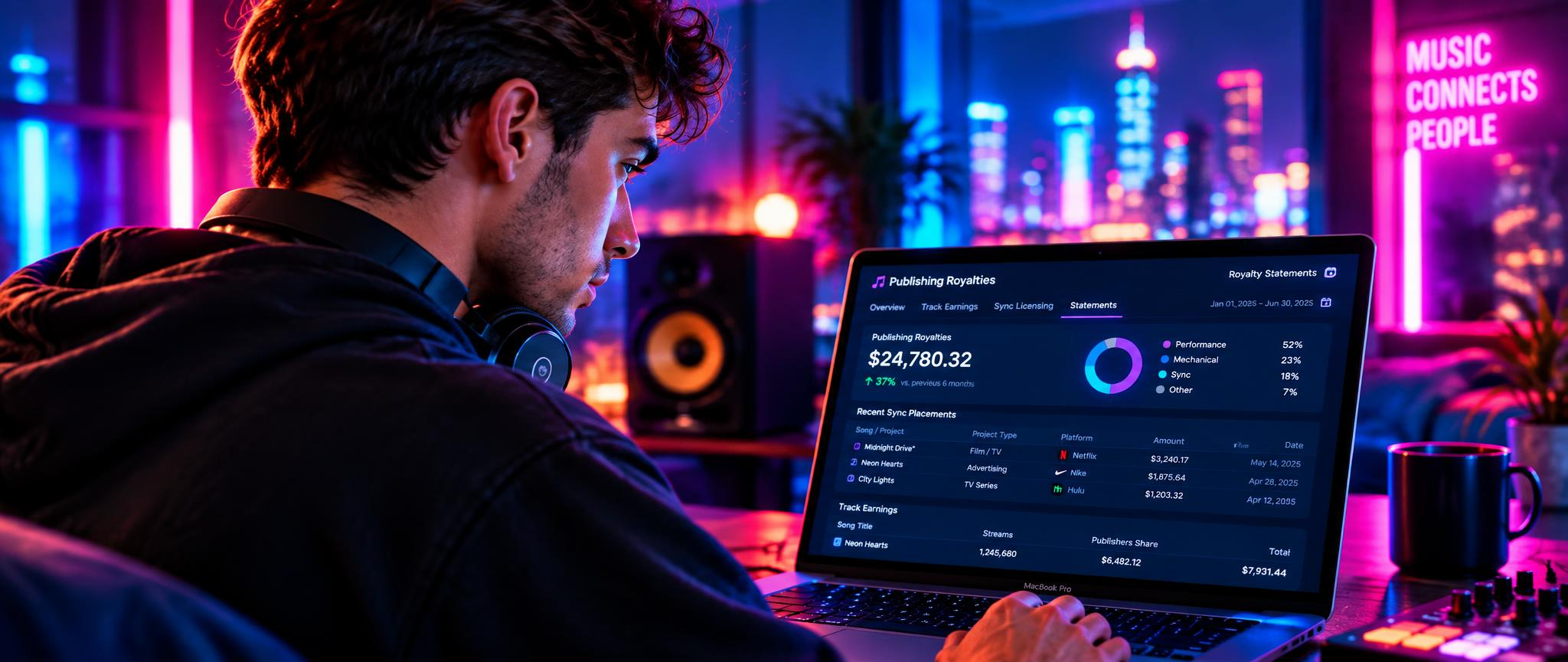
2. ✍️ Publishing
A recording and a song are not the same thing.
The recording is the master.
The song itself is the composition.
Lyrics.
Melody.
Chords.
That second copyright creates publishing income.
And publishing has become enormous.
U.S. publishing revenue grew from about $2.17 billion in 2014 to $7.3 billion in 2025.
In 2025, the NMPA reported the mix as approximately:
52% Performance
24% Sync
19% Mechanical
5% Other
If you're writing songs...
Pay attention.
3. 📻 Performance Royalties
Performance royalties are generated when the composition is publicly performed.
That can include:
Radio.
Television.
Streaming.
Concerts.
Bars.
Restaurants.
Public spaces.
Performance Rights Organizations collect this money on behalf of songwriters and publishers.
If you wrote the song...
The song itself can keep generating income long after the recording session ends.
4. ⚙️ Mechanical Royalties
Mechanical royalties sound like something from a factory.
Historically...
They basically were.
Every time a record was mechanically reproduced...
The songwriter earned a royalty.
Vinyl.
Cassette.
CD.
Downloads.
Today, interactive streaming also generates mechanical royalties.
In the U.S., The Mechanical Licensing Collective collects digital audio mechanical royalties from streaming services and distributes them to songwriters, publishers and other composition rightsholders.
The MLC has now distributed more than $4 billion in streaming mechanical royalties.
Same royalty.
New machine.
5. 🎬 Sync
Someone puts your music in:
A movie.
TV show.
Advertisement.
Trailer.
Video game.
YouTube production.
Now the music is being synchronized to picture.
That creates sync licensing.
Usually there are two sides to clear:
The song.
And...
The recording.
Own both?
You control both sides of the deal.
For independent artists and producers...
That can be powerful.
 ⭐️ Download my Free Music Production Guides or take my free Ableton Live Course ⭐️
6. 📡 Digital Performance + Neighboring Rights
There is another royalty connected to the recording itself.
In the U.S., SoundExchange collects statutory digital performance royalties from services including non-interactive streaming, webcasters and satellite radio.
In 2025, SoundExchange distributed approximately $992 million to recording artists and rights owners.
Lifetime distributions have now passed $13 billion.
This is separate from songwriting publishing.
Different copyright.
Different money.
7. 🎤 Touring
Here's another huge shift.
In the old model...
The tour often helped sell the record.
Today...
The recording often helps sell the tour.
Pollstar estimated major North American concert ticket sales at roughly $1.1 billion in 1990.
By 2025, its Top 100 North American touring artists alone grossed approximately:
$5.8 billion.
And worldwide...
The Top 100 tours grossed around:
$8.9 billion.
The experience cannot be streamed.
You have to be there.
That scarcity has value.
8. 👕 Merchandise
Eventually every artist discovers something strange.
We're all T-shirt salesmen.
You write the song.
Produce the record.
Build the audience.
Play the show.
Then someone buys:
A shirt.
A hoodie.
A poster.
Vinyl.
A deluxe CD.
A signed box.
The music created the relationship.
The merchandise gives the fan something physical that says:
I am part of this.
In the CD era...
The recording itself was the physical product.
Today...
The recording may be almost invisible.
So physical merchandise becomes more valuable as a symbol of the relationship.
9. 🎛️ Music Producer Income
Producers can have several income streams too.
Production Fee
Get paid for making the record.
Producer Points
Receive an agreed percentage connected to the master recording.
Songwriting
If you help write:
Melody.
Lyrics.
Chords.
Or other copyrightable composition...
You may also share publishing.
SoundExchange
A featured artist can direct part of their SoundExchange royalties to producers, mixers or engineers through a Letter of Direction.
Your Own Masters
Produce your own music...
And you may become the artist, producer and master owner.
One person.
Multiple rights.
Multiple income streams.
🔟 Direct to Fan
This is perhaps the biggest philosophical change.
You no longer necessarily need:
A record store.
Radio station.
Major label.
Television network.
Or distributor with warehouse space...
To reach the listener.
Artists can sell directly through:
- Websites
- Bandcamp
- Memberships
- Fan clubs
- Patreon
- Crowdfunding
- Limited releases
- VIP experiences
- Courses
- Lessons
- Sample packs
- Presets
A thousand real fans can sometimes be more valuable than a million passive listeners.
Because attention is useful.
But relationship is valuable.
🧮 One Song Can Generate Many Income Streams
Imagine you write, produce and release a song yourself.
Someone streams it.
Master royalty.
You wrote it.
Publishing.
The stream reproduces the composition.
Mechanical royalty.
The composition is publicly performed.
Performance royalty.
SiriusXM plays the recording.
Digital performance royalty.
Netflix licenses it.
Sync + master license.
People discover you.
They buy tickets.
Touring.
They buy the shirt.
Merchandise.
One song.
Many doors.
⚔️ Then vs. Now
| 1990s | 2026 |
|---|---|
| Sell copies | Sell access + experiences |
| Album | Catalog |
| Record store | Streaming platform |
| Radio + MTV | Algorithms + social media |
| Label distribution | Global digital distribution |
| Physical mechanicals | Streaming mechanicals |
| Tour promotes album | Music promotes tour |
| Merch is extra | Merch can be core |
| Few major revenue lanes | Many smaller revenue lanes |
| Audience | Community |
⚖️ More Opportunity. More Responsibility.
The old system had huge gatekeepers.
But it was easier to understand.
Make record.
Sell record.
The modern system gives musicians far more ways to make money.
But now you have to understand:
Copyright.
Metadata.
Publishing.
Distribution.
Royalties.
Touring.
Marketing.
Merchandise.
Fan relationships.
That's the trade.
More control.
More responsibility.
🥷 Don't Build One Income Stream
The mistake is asking:
How much does Spotify pay?
That's only one piece.
Ask instead:
How many ways can this music create value?
For the musician:
Recording.
Shows.
Merchandise.
Fans.
For the songwriter:
Performance.
Mechanical.
Sync.
For the producer:
Fees.
Points.
Publishing.
Master ownership.
The modern music business isn't one river.
It's a delta.
Lots of smaller streams...
Flowing from the same song.
And at the center of all of them?
The music still has to be good.
Sources
- RIAA — U.S. Recorded Music Revenue
- IFPI Global Music Report
- Spotify Loud & Clear
- National Music Publishers' Association
- The Mechanical Licensing Collective
- SoundExchange
- CISAC Global Collections Report
- Pollstar
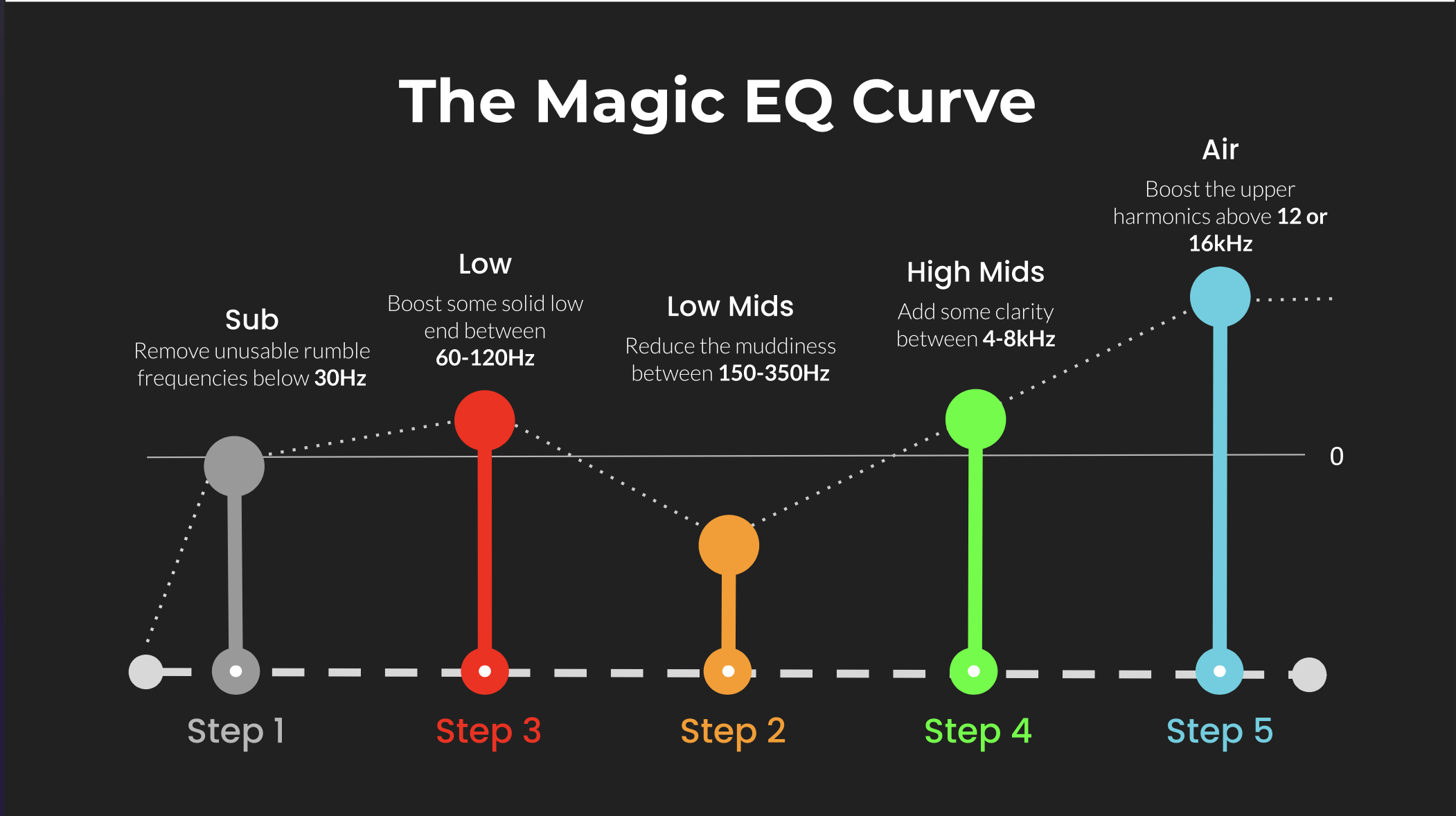 ⭐️ Download my Free Magic EQ settings Guide ⭐️

⭐️ Download my Free Magic Reverb settings Guide ⭐️
#protools #daw #homestudio #recordingschool #recording #musicproduction
Also read:
How to Start Your Own Online Business Teaching Music

Hey, I'm Futch - Music Production Coach and Ableton Certified Trainer
Learn how to make your first song and beat in Ableton Live with my
FREE 90-minute Ableton Live course
I've been teaching audio engineering and music production for 35 years.⭐️
Check out my new online music production program: Music Production Ninja...