Active Listening: How to Hear Every Instrument in a Song 👂
You've Heard This Song 100 Times.
You know every word.
You can hum the melody.
But can you name every instrument?
The kick.
The bass.
The pad hiding behind the chorus.
The shaker you never noticed.
Most people hear a song as one sound.
Producers hear it as parts.
And the good news?
That's a skill.
Not a gift.
Also read: How to Choose and Use Reference Mixes 🎧
Quick Summary
To hear every instrument, listen in passes:
👉 Low to high — bass first, cymbals last
👉 Left to right — what's in the middle, what's on the sides
👉 Front to back — what's loud and close, what's quiet and far away
👉 When it comes in — what starts in the verse, what joins in the chorus
One pass at a time.
Your ears get faster every time.
1. 🎧 Set Up to Listen
Use good headphones or your studio speakers.
Not your phone speaker.
Turn it up to a comfortable level.
Not loud.
Pick a song you love.
Then grab a pen.
You're going to write a list.
Also read: Should I Mix on Headphones or Speakers?
2. 🔊 Low to High
Start at the bottom.
👉 Sub and kick — what you feel more than hear
👉 Bass — the low notes that move
👉 Mids — guitars, keys, the vocal
👉 Highs — hi-hats, shakers, cymbals, the air on the vocal
Listen to the whole song for just one of these.
Then play it again for the next one.
Also read: DAW EQ: The 7 Frequency Bands 🎛️
3. ↔️ Left, Right, Front and Back
Now listen for where things are.
The kick, the bass and the lead vocal usually sit in the middle.
Guitars, keys and background vocals are often spread to the sides.
Try this:
Take one headphone off.
Then the other.
What disappears?
That's where it lives.
Then listen for depth.
Loud, dry sounds feel close.
Quiet sounds with lots of reverb feel far away.
 ⭐️ Download my Free Music Production Guides or take my free Ableton Live Course ⭐️
4. 🗺️ Map the Song
Now listen for when.
Write the song's sections down the page:
👉 Intro
👉 Verse
👉 Chorus
Next to each one, write what's playing.
You'll notice something.
Big choruses often aren't louder.
They just have more parts.
A new pad.
A tambourine.
A second vocal.
Also read: Mastering Song Structure: Intro, Verse, Chorus & Bridge
⚔️ Casual Listening vs. Active Listening
| Casual Listening | Active Listening | |
|---|---|---|
| You hear | One sound | Separate parts |
| You notice | The melody and the words | Every instrument and where it sits |
| You learn | How the song feels | How the song was built |
⚖️ Too Much vs. Too Little
Too much...
And you can't enjoy music anymore.
Every song turns into homework.
Too little...
And you copy the feeling of a song but never learn how it was made.
Just right is one song a week with the pen out.
And every other song just for fun.
🥷 Your First Listening Session
Step 1
Pick one song you love.
Step 2
Play it four times: low to high, left to right, front to back, and section by section.
Step 3
Write down every instrument you hear.
Then do it again next week with a new song.
The list gets longer.
The songs you make get better.
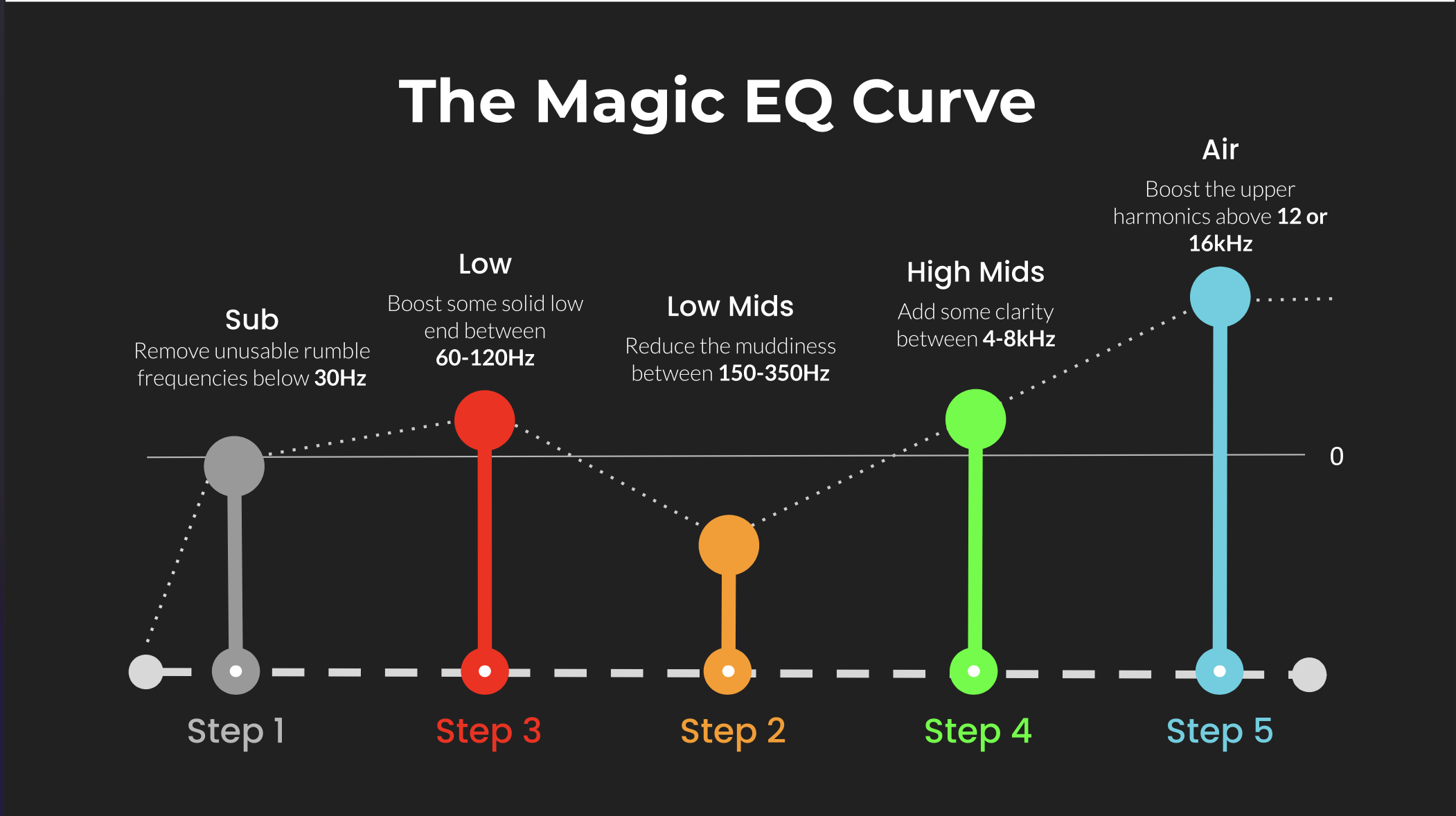 ⭐️ Download my Free Magic EQ settings Guide ⭐️

⭐️ Download my Free Magic Reverb settings Guide ⭐️
#protools #daw #homestudio #recordingschool #recording #musicproduction
Also read:
How to Start Your Own Online Business Teaching Music

Hey, I'm Futch - Music Production Coach and Ableton Certified Trainer

Learn how to make your first song and beat in Ableton Live with my
FREE 90-minute Ableton Live course
I've been teaching audio engineering and music production for 35 years.⭐️
Check out my new online music production program: Music Production Ninja...