Classic Drum Machines: The MPC60 🥁
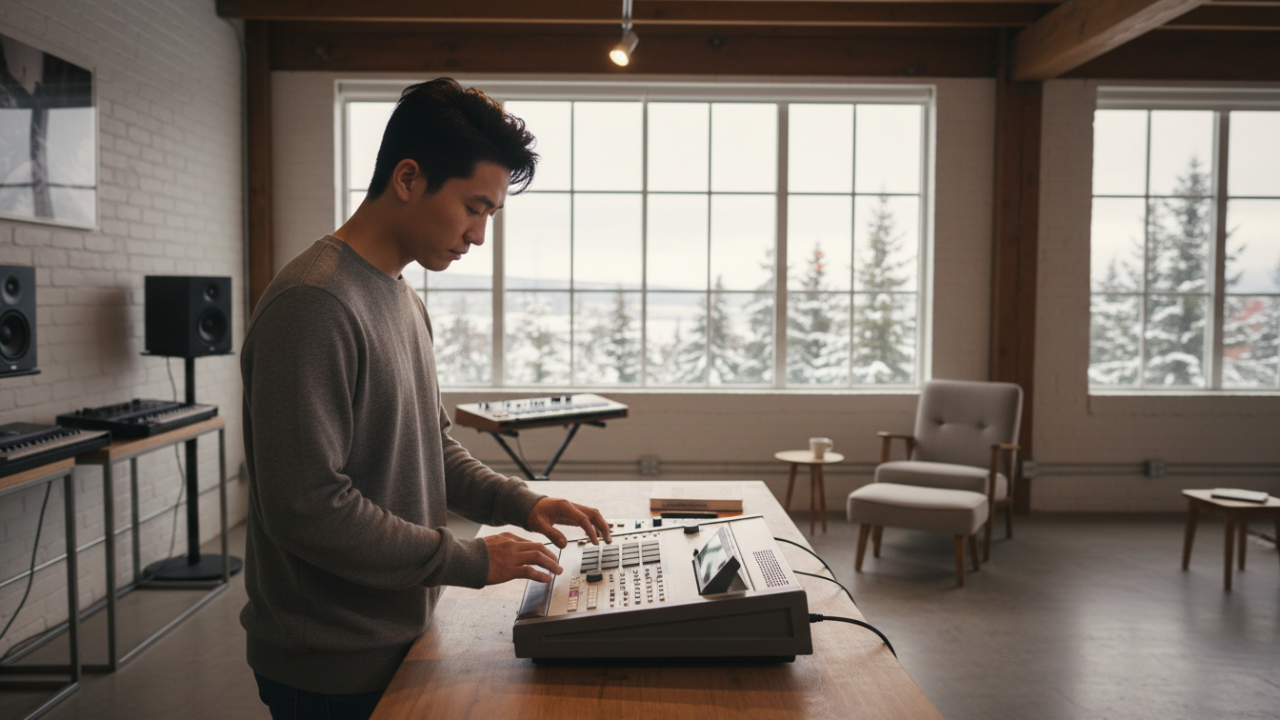
The Box That Taught Producers to Play
Some machines make beats.
The MPC60 made musicians.
It didn’t just trigger samples — it captured feel.
It didn’t just sequence patterns — it shaped groove.
It didn’t just crunch audio — it preserved attitude.
The MPC60 was the moment sampling and performance became one instrument.
About the Akai MPC60:
👉 Released in 1988 and co-designed by Roger Linn and Akai, the MPC60 introduced velocity-sensitive pads, powerful sampling, and the legendary MPC swing — redefining beatmaking and shaping hip hop, R&B, pop, and electronic music.
⚙️ The History — When Roger Linn Met Akai
After creating the LM-1 and LinnDrum, Roger Linn teamed up with Akai to build something revolutionary:
a sampler you could play instead of program.
In 1988, the MPC60 launched with:
-
pads that felt like instruments
-
sequencing that felt alive
-
sampling that sounded gritty yet rich
-
a workflow built around creativity
Producers didn’t just tap pads.
They performed beats.
They sculpted rhythms in real time.
🎯 Core Innovations
-
Velocity-sensitive pads — dynamic, expressive, playable.
-
96 PPQ sequencer — precise yet deeply musical.
-
Iconic MPC swing — uncopyable feel (even today).
-
12-bit sampling — warm, punchy, timeless.
-
A true workstation — sampling, sequencing, editing, all in one box.
“If the SP-1200 was the chiseling tool, the MPC60 was the instrument.”
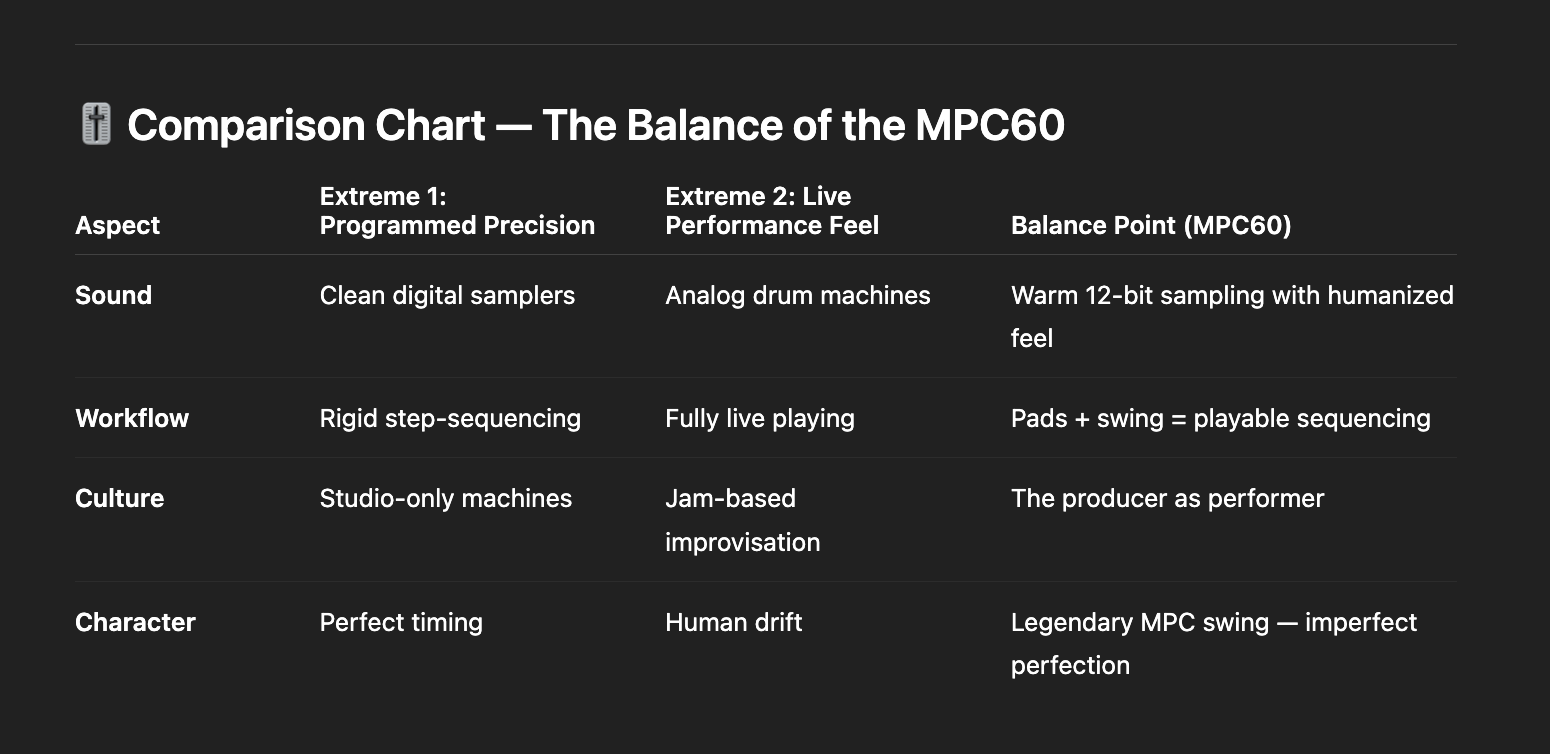
🧩 Balance Point
Between live performance and machine precision.
Human feel with hardware stability.
🔑 Key Takeaway
The MPC60 turned beatmaking into a hands-on craft — a physical art form.
Classic Drum Machines: The SP-1200 🪨
🔊 The Originality — The Sound of Humanized Sampling
Question: What made the MPC60’s sound unique?
Two worlds collided inside the MPC60:
-
Roger Linn’s philosophy of groove
-
Akai’s sampling power
The result?
A sampler that didn’t sound digital or analog — it sounded alive.
🎯 Core Sound Traits
-
12-bit warmth — punchy, gritty, with a soft high-end rolloff.
-
Deep bass texture — perfectly imperfect low frequencies.
-
MPC swing — the groove no plugin can truly replicate.
-
Velocities + pads — turning samples into instruments.
“The MPC60 didn’t just sample sound — it sampled feeling.”
🧩 Balance Point
Between SP-1200 grit and future MPC polish.
The cornerstone sound of early-to-mid ’90s beatmaking.
🔑 Key Takeaway
The MPC60’s originality lies in its feel — not just its sound.
Classic Drum Machines: The LinnDrum 🥁
 ⭐️ Download my Free Guide The Magic EQ Settings that work on EVERYTHING!
🌍 The Cultural Impact — The Beatmaker’s Instrument
The MPC60 reshaped the entire role of the producer.
Suddenly, a single person could:
-
sample
-
sequence
-
arrange
-
perform
-
compose
-
groove
All inside one box.
It transformed beatmakers into multi-instrumentalists.
Classic Drum Machines: The Oberheim DMX 🥁
🎤 Hip Hop — The Rise of the Sonic Auteur
If the SP-1200 defined the golden era…
…the MPC60 defined the producer era.
Key Artists & Albums
-
DJ Premier — early Gang Starr classics
-
Marley Marl — the architect of sample layering
-
Dr. Dre — foundations of the G-Funk era
-
J Dilla — early work before the MPC3000
-
Lord Finesse — D.I.T.C. foundations
-
Q-Tip / A Tribe Called Quest — evolving textures
-
DJ Shadow — the classic samples-only album "Endtroducing"
The MPC60 turned intuitive, swing-driven feel into an entire generation’s sonic language.
🎛️ R&B — The Birth of Modern Rhythm
Producers used the MPC60 to glue sampled drums to live instruments, creating the hybrid feel of early ’90s R&B.
-
Teddy Riley — the New Jack Swing architect
-
Jimmy Jam & Terry Lewis — hybrid sample/live grooves
-
Babyface — early rhythmic simplicity
The MPC60 made R&B dance.
🎹 Electronic & Pop — The Precision Hybrid
While known for hip hop, the MPC60 also influenced electronic and pop producers who wanted human groove on electronic textures:
-
Massive Attack
-
Depeche Mode
-
Bjork collaborators
-
Leftfield
It became a sequencing brain for hybrid setups.
🧩 Balance Point
Between live musicianship and digital sequencing.
Between raw sampling and clean production.
Between street rhythm and studio precision.
🔑 Key Takeaway
The MPC60 made groove the center of modern music.
🧠 FAQ
Q: What year was the MPC60 released?
A: 1988.
Q: Why is the MPC60 still respected?
A: Its combination of 12-bit sampling, expressive pads, and legendary swing created a timeless feel.
Q: Who used the MPC60?
A: DJ Premier, Marley Marl, Dr. Dre, Lord Finesse, Teddy Riley, and many more across hip hop, R&B, pop, and electronic music.
Q: How is the MPC60 different from the SP-1200?
A: The MPC60 focused on feel and performance, with longer sampling times, velocity pads, and more flexible sequencing.
 ⭐️ Start by downloading all of my FREE Music Production Guides ⭐️ It took me years to learn this stuff!
🔑 Why This Matters
The MPC60 didn’t just change production.
It changed producers.
It turned beatmaking into performance.
It turned sampling into musicianship.
It turned groove into philosophy.
“The MPC60 wasn’t a tool.
It was a teacher.”

⭐️ Download my Free Magic Delay settings Guide ⭐️

⭐️ Download my Free Magic Reverb settings Guide ⭐️
#protools #daw #homestudio #recordingschool #recording #musicproduction
Also read:
How to Start Your Own Online Business Teaching Music

Hey, I'm Futch - Music Production Coach and Ableton Certified Trainer
Learn how to make your first song and beat in Ableton Live with my
FREE 90-minute Ableton Live course
I've been teaching audio engineering and music production for 35 years.⭐️
Check out my new online music production program: Music Production Ninja...