Shure SM7B vs SM57: Which Mic Should I Buy For My Home Studio? 🎤

One Mic, Many Roles
“The right tool doesn’t just capture sound.
It shapes how you create.”
When building a home studio, one of the first real decisions is the microphone.
Two legends always come up:
- Shure SM7B
- Shure SM57
They look different.
They’re both dynamic mics.
They’re both used on professional records.
But they serve very different roles.
Quick Summary
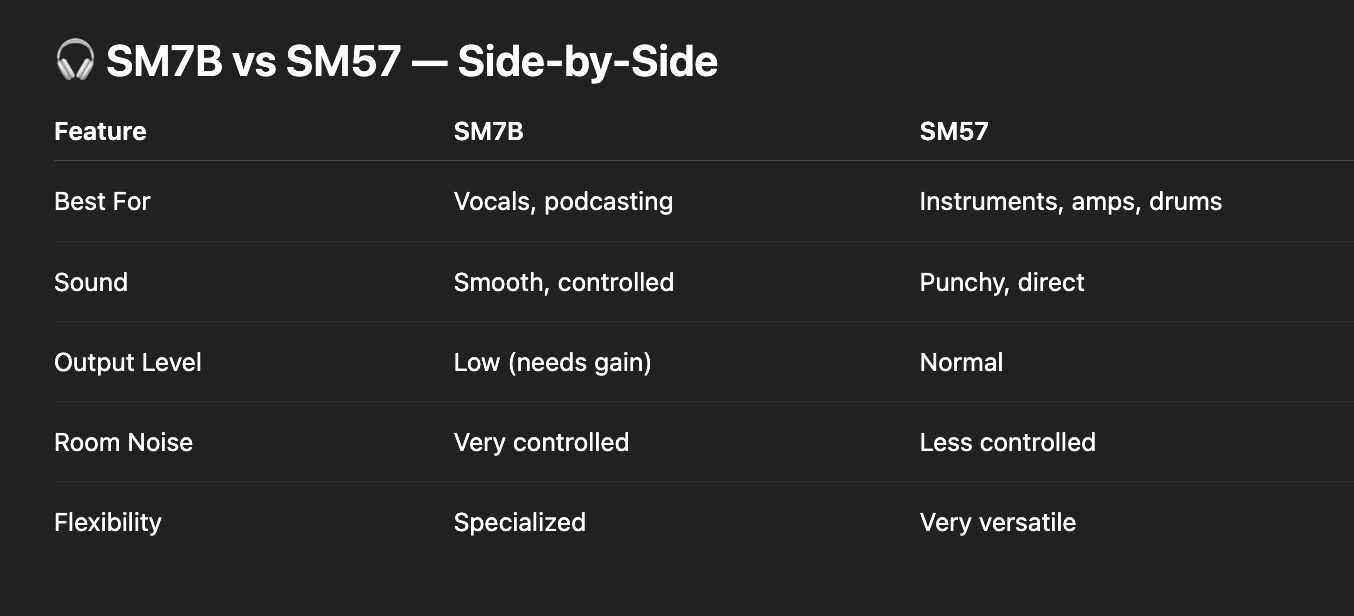
👉 Choose the SM7B for vocals, podcasting, and voice recording. Choose the SM57 for guitars, drums, and general-purpose recording. If you need a vocal-ready version of the SM57, consider the SM58.
Microphones 101: Which Mic Should I Buy for My Home Studio?
🎙️ The Core Difference
Think of it like this:
- SM7B = Voice specialist
- SM57 = Instrument workhorse
Both are tools.
But they’re designed for different jobs.
🎤 Shure SM7B — The Voice Mic
Shure SM7B
The SM7B is famous for one thing:
Clean, controlled vocal recording.
It’s used for:
- podcasting
- voiceovers
- singing
- streaming
It smooths out harsh frequencies and rejects background noise.
That’s why it’s everywhere.
Strengths
- warm, polished vocal tone
- excellent background noise rejection
- forgiving in untreated rooms
The Catch — Low Output
The SM7B is quiet.
Really quiet.
That means:
You need strong preamps.
Your Options
Option 1 — Good Audio Interface
Choose an interface with high-quality gain.
Option 2 — Inline Booster
Add a gain booster like a Cloudlifter.
This gives you clean extra gain without noise.
Option 3 — External Preamp
A dedicated preamp can also solve the problem.
If you don’t have enough gain, the SM7B won’t shine.
🎸 Shure SM57 — The Workhorse
Shure SM57
The SM57 is one of the most recorded microphones in history.
It’s everywhere.
Studios.
Stages.
Albums.
What It’s Great For
- electric guitar amps
- snare drums
- percussion
- general instrument recording
It’s tough, simple, and reliable.
Why People Buy Multiple
Because it works on everything.
You can build an entire setup with a few SM57s.
- one on guitar
- one on snare
- one on percussion
Done.
🎤 What About a SM57 for Vocals?
The SM57 can record vocals.
But it’s not ideal out of the box.
The Simple Upgrade
If you want an SM57-style mic for vocals:
👉 Get a
Shure SM58
It’s essentially:
- the same core mic
- with a built-in pop filter
Better for singing and speaking.
 ⭐️ Download my Free Music Production Guides or take my free Ableton Live Course ⭐️
🎛️ Which One Should You Buy?
Choose the SM7B if you:
- record vocals or podcasts
- want a clean, pro vocal sound
- work in a less-treated room
- have (or will get) enough gain
Choose the SM57 if you:
- record guitars or drums
- want a flexible, all-purpose mic
- are building a starter mic collection
- want maximum value
The Real Answer
Most studios end up with both.
- SM7B → voice
- SM57 → everything else
3 Home Studio Setups for Every Budget (and What to Avoid) 🎛️
🧠 FAQ
Q: Can I use an SM57 for vocals?
A: Yes, but the SM58 is better suited.
Q: Why is the SM7B so quiet?
A: It has low output and needs more gain.
Q: Do I need a Cloudlifter for the SM7B?
A: Only if your interface doesn’t provide enough clean gain.
Q: Which mic is better for beginners?
A: SM57 — more versatile and easier to use.
🔑 Final Thought
Microphones don’t just capture sound.
They shape your workflow.
The best mic is the one that fits what you record most.
If your world is voice → SM7B.
If your world is instruments → SM57.
Start there.
Then build from experience.
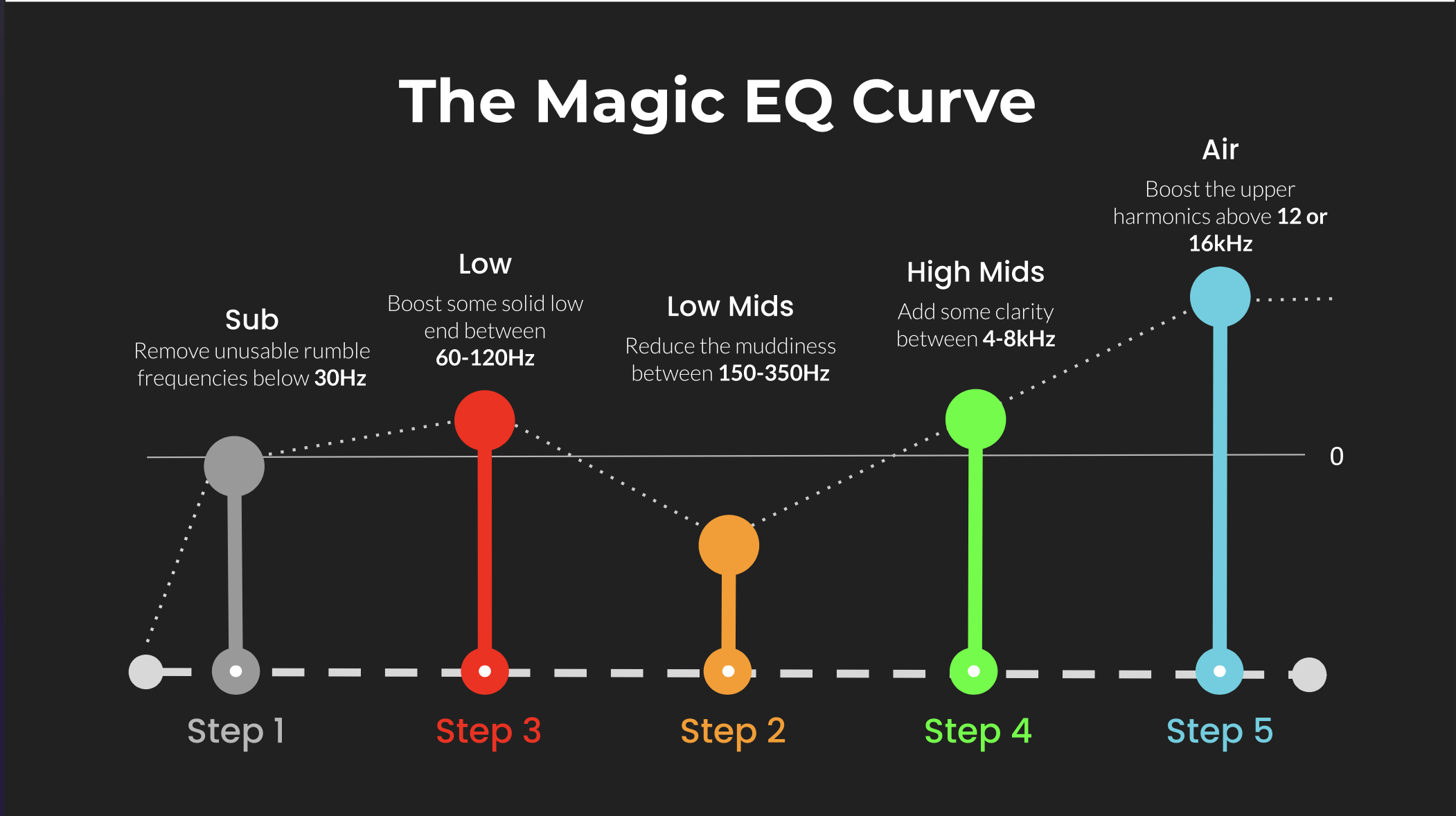 ⭐️ Download my Free Magic EQ settings Guide ⭐️

⭐️ Download my Free Magic Reverb settings Guide ⭐️
#protools #daw #homestudio #recordingschool #recording #musicproduction
Also read:
How to Start Your Own Online Business Teaching Music

Hey, I'm Futch - Music Production Coach and Ableton Certified Trainer

Learn how to make your first song and beat in Ableton Live with my
FREE 90-minute Ableton Live course
I've been teaching audio engineering and music production for 35 years.⭐️
Check out my new online music production program: Music Production Ninja...