

"Experience is not what happens to a man; it is what a man does with what happens to him."
— Aldous Huxley
Capture the results. Then go back and watch what you actually did.
Fighter squadrons don't go home after a flight. They sit down and walk through what happened until everybody in the room knows why.
We usually bounce a mix and then open another DAW session.
The Starting Point
Most of us have never reviewed a single session we have finished.
We finish, we bounce, we upload, we move on, and the next song starts from the same place the last one did.
That is why the same mistake can survive for years without ever being noticed.
Nothing in the room is set up to tell us, and nobody else is going to.
The Invitation
Ten minutes, at the end, while it is still warm.
Write down what you set out to do, what actually happened, and how those two are different.
Robert Teschner flew F-15s and now teaches debriefing to companies, and his rule is the one that makes it work: the debrief is about learning, not about blame.
Rank comes off at the door, and in our case that means we stop defending the choices we made four hours ago.
The mix does not care how we felt about it at the time.
The Test
Gotye built "Somebody That I Used To Know" at his parents' place in rural Victoria, around a sample of a Luiz Bonfá guitar instrumental from 1967.
It wasn't written and finished in one session.
It was made, listened back to, pulled apart and rebuilt, over and over, by somebody who kept going back to the drawing board.
It won Record of the Year at the 2013 Grammys.
The talent in that songwriting is real, but so is the revising; only one of those two things is available to everyone - the review.
The Guidepost
A mix we love and a mix we hate teach us nothing until we determine why.
"It sounds better" is not a reason; it is a feeling with the reason still hidden.
Match the levels first, because most of what we call better is louder, and louder wins every blind comparison we have ever run on ourselves.
Then speak the facts: the vocal sits further back, the low end is tighter, the chorus arrives late.
Now there is some data to carry into the next project.
The Change
End the session with a debrief after the bounce.
Three questions, written down, every time: what was the goal, what happened, what will I do differently.
Keep them somewhere they will be read again, because a lesson we cannot find is a lesson we get to learn twice.
Pro Tip: One Google Doc with new song/mix tabs on the left.
Do it while the session is still open because tomorrow we only remember the version we want to be true.
The Return
The producers who get better aren't practising more than the rest of us.
They're reviewing more than the rest of us.
Everybody gets the same number of takes, and the same number of finished songs, but the difference is whether anything was learned.
After your next session, don't ask:
"What should I fix next?"
Ask:
"What did I just do?"
Free Ableton Live Course and Music Production Resources
Song of the Week 🎧
Gotye — "Somebody That I Used To Know"
|
![Gotye - Somebody That I Used To Know (feat. Kimbra) [Official Music Video]](https://kajabi-storefronts-production.kajabi-cdn.com/kajabi-storefronts-production/media_embed_thumbnails/thumbnail-2dc26960f64e7492223678ca7249b87f405469f818d8e8e4b9cbba5388c30a7e.jpg "Gotye - Somebody That I Used To Know (feat. Kimbra) [Official Music Video]")
On the Mixing list under Room reverb. A record built almost entirely out of revision, made at his parents' place in rural Victoria around a sample of Luiz Bonfá's 1967 instrumental "Seville", and Record of the Year at the 2013 Grammys.
Listen to the space rather than the parts. The verse is almost empty on purpose, so the xylophone figure and one dry vocal carry it, and there is nowhere to hide. When Kimbra arrives the room changes size, and that is arrangement doing the work a reverb usually gets credit for.
Wisdom of the Week 📚
Debrief to Win — Robert "Cujo" Teschner
|
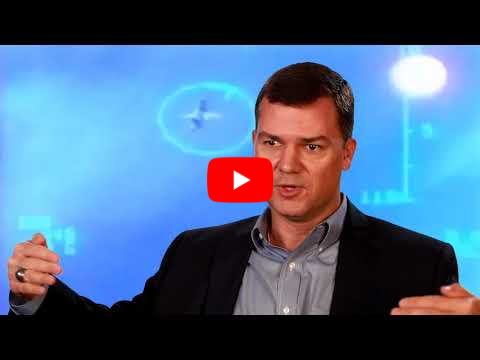
Teschner flew F-15s and now teaches the same debriefing method to businesses. The useful part for us is that a debrief is a structure, not a mood: state the objective, compare it against what actually happened, find the cause rather than the culprit, and write down the one thing that changes next time. A studio session is exactly that kind of flight, and almost nobody debriefs one.
Plugin of the Week 🔌
M17 Finishing. The debrief, as a plugin. Load up to four references, match the loudness so the comparison is honest, and switch between them without leaving the mix. Most of what we hear as "better" disappears the moment the levels are the same, and knowing that about ourselves is worth the price on its own.
Free Plugin of the Week 🆓
Free spectrum analyzer that holds one curve on screen while you play something else over it. Freeze the reference, play yours, and the debrief stops being a conversation about taste.

Unsolicited life advice for music makers





Responses