

“Be so good they can't ignore you.”
— Steve Martin
In music production, the studio we want to work in usually isn't hiring.
So we weasel our way in for free, as the intern, and make ourselves useful.
Then we keep being useful until nobody there can picture the place without us.
The Starting Point
Most of us wait to be hired, and the waiting can last for years.
The studios, labels and producers we want to learn from usually have no job to offer, but they always have work that isn't getting done.
Cables need wrapping, sessions need labelling, and somebody's drum samples need sorting into folders.
A helpful parasite lives off a place that already works, and pays its way with the jobs nobody else wants.
The Invitation
Pick one studio or workplace you want to be in, and offer to work there for free for a fixed stretch, like three months.
Ask for nothing in return but a chair in the corner and the chance to watch.
Then do every small job better than it needs to be done, and do it before anyone asks.
The deal is simple: our time for their room, their gear and their people.
The Test
Write down the three things that go wrong in that studio every week.
They're usually small: nobody backs up the sessions, the mic locker is a mess, or the producer loses twenty minutes a day looking for the right kick sample.
Fix one of them this week without being asked, and see if anyone notices.
If nobody notices, fix the second one; if nobody notices that either, we're in the wrong room, and it's time to find another one.
The Guidepost
Useful beats talented, at least at the start.
Talent takes months to show, but a wrapped cable, a labelled session and a backed-up drive are visible by Friday.
The people who get asked back are the ones who made everyone else's day easier.
The people who get paid are the ones the owner can't imagine the place without.
The Change
Once a week, ask the person who runs the room one question: “What's the most annoying job here that nobody wants?”
Then take that job, and keep it for as long as we're there.
Keep a list of every job we've taken over, with the date, so we can watch the place start to depend on us.
When the studio would stall without us, that's the day to talk about getting paid.
Pro Tip: Save the studio's usual setup as the Default Set in Ableton Live (or as a session template in any DAW), with their tracks, routing and go-to plugins already loaded, so every session starts in two minutes instead of twenty.
The Return
The intern who was worth keeping around is usually the producer who is worth hiring.
Years later, we're the ones with the room, and someone shows up at the door offering to wrap cables for free.
Let them in, give them the job nobody wants, and watch who notices what's broken.
The next time you meet a producer you want to learn from, instead of asking: “Are you hiring?”
Ask: “What's the job here that nobody wants?”
Free Ableton Live Course and Music Production Resources
Song of the Week 🎧
|
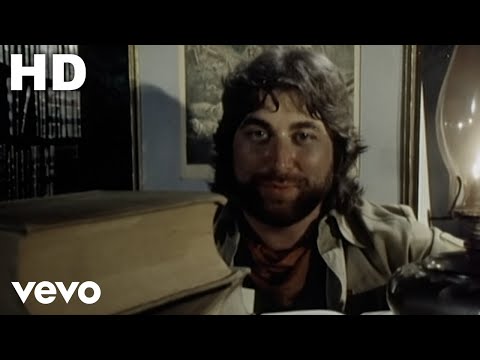
Listen to the drums on this song before anything else; the whole track rides on that loop.
Before Toto were a band, most of them were the session players everyone else in Los Angeles hired. David Paich and Jeff Porcaro were in Boz Scaggs' studio band for Silk Degrees in 1976, and that's where they made the plan to start Toto. While Toto IV was being promoted, the band was in the studio playing on Michael Jackson's Thriller.
Paich wrote this song in 1982, with Porcaro as co-writer, and it went onto Toto IV as a late addition. The rhythm track was a tape loop made the old way, with the tape running around the room past the mic stands; Porcaro's drums went down first, and Lenny Castro added the percussion loop on top. The band had no idea it was a hit until the head of Columbia Records called to say it was filling dance floors in New York. On February 5 1983, it went to number one on the Billboard Hot 100, the only time Toto got there, and Toto IV won Album of the Year at the Grammys that year. In June 2024, the official video passed one billion plays on YouTube.
A great song. Paich calls it a fluke, and the session players who were hired to play on everyone else's hits ended up with the biggest one of their own.
YouTube Wisdom of the Week 📚
The Making of McDonald's: The Biography of Ray Kroc (David Senra, Founders Podcast)
|
Grinding It Out — Ray Kroc
Kroc was 52 and selling Multimixer milkshake machines when, in 1954, he drove out to a hamburger stand in San Bernardino, California, that was running eight of them. He talked the McDonald brothers into letting him open more of their restaurants, and he opened the first one himself in Des Plaines, Illinois, in April 1955. In 1961, he bought the brothers out for $2.7 million. He argues that the work is grinding it out: showing up every day, making the service the same in every restaurant, and being ready for the lucky break instead of waiting for it. In a session, that means being the person who has the room set up, the drive backed up and the samples labelled before the producer walks in.
Plugin of the Week 🔌
Two knobs, Gain and Peak Reduction, and a switch between Compress and Limit; that's the whole front panel. Universal Audio models a late-'60s “Silver” LA-2A, and its page calls it the first-choice vocal compressor in professional studios around the world. Put it on the lead vocal track, turn up Peak Reduction until the meter dips 3 or 4 dB on the loud words, and A/B it against the bypassed track; the vocal sits in the mix, and nothing about it sounds compressed. It's the assistant engineer of compressors: it makes everyone's day easier and never mentions it.
Free Plugin of the Week 🆓
A free British-style mic and line preamp, with a high-pass filter, a low-pass filter, two modules that bypass on their own and a phase-invert button. Put it first on a vocal or a bass track and A/B it against the clean track. It runs as VST, AU and AAX on Mac and Windows, and the developer gives everything away through Patreon.

Unsolicited life advice for music makers





Responses