
“Do not wait; the time will never be just right. Start where you stand, and work with whatever tools you may have at your command.”
— Napoleon Hill
In music production, the dream studio is always the one down the street, and ours is the one we keep apologizing for.
So the project waits until the room is ready, and the room is never ready.
The Starting Point
The dream studio is down the street. You live near it, but it's not yours yet.
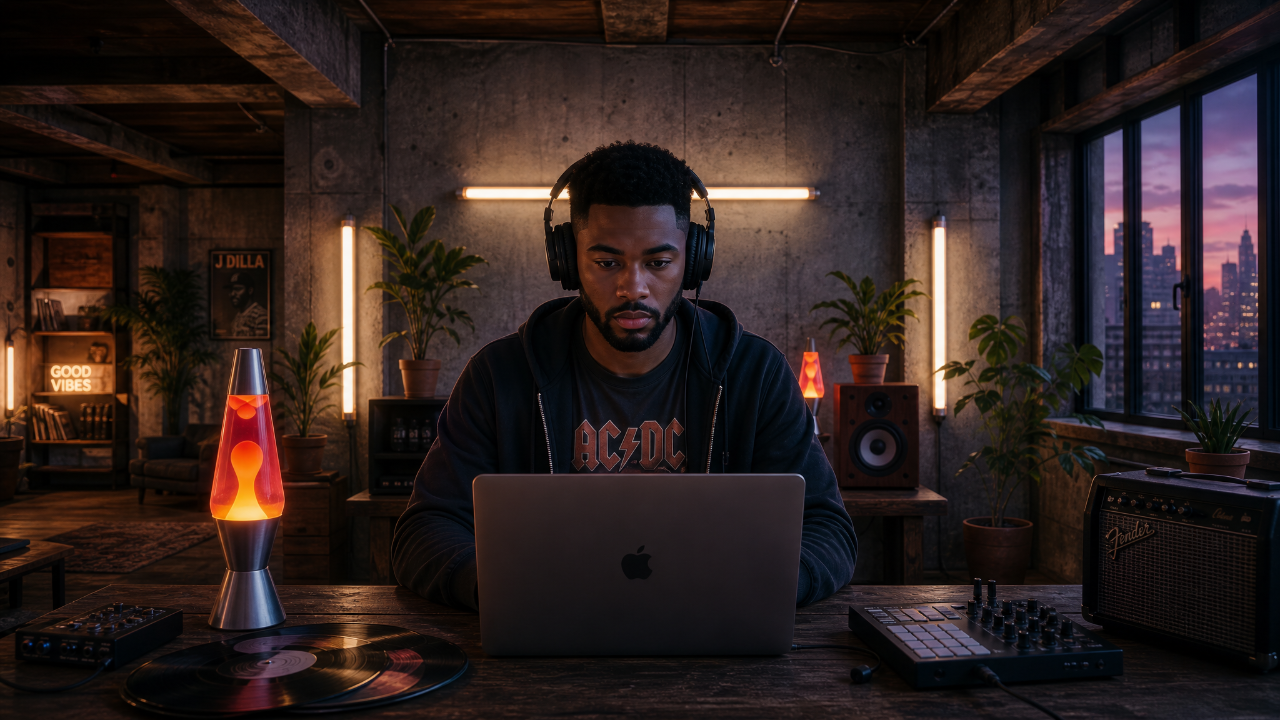
Yours is a spare bedroom with the monitors we could afford at the time, and a non-Herman Miller chair that was never meant for eight hours.
The plan is to get serious once we have the "real" studio.
Meanwhile the songs sit at eighty percent, because eighty percent is where we stop mixing and start shopping.
The Invitation
Ryan Holiday spent a whole book on the albums, books and films that are still selling decades after they came out.
The work came first, and then the launch. The gear and the room came later.
Look at the last thing you finished and the last thing you bought, and notice which one is still working for us.
The Test
Tracy Chapman wrote “Fast Car” in 1987, while she was still a college student, and recorded it on her debut album.
In June 1988, she was a fill-in at Wembley Stadium, three songs on an afternoon bill, when Stevie Wonder walked off because the floppy disk for his keyboard had gone missing.
The organizers pushed her back out with a microphone and an acoustic guitar to hold a full stadium.
She played “Fast Car,” and by the end of August her album was number one in America.
The Guidepost
The distance between the studio we have and the one we want is measured in gear.
The distance between you and the album project is measured in finished songs.
Spending money only closes the first one.
The Change
Pick one song this week and finish it in the room as it is, on the monitors as they are.
Bounce it, put it on a phone, and play it in the car right after a song you love.
Write down the two things that are furthest from your reference mix, and fix those two things during the next session.
Pro Tip: The car, the phone and one pair of headphones — three reference rooms you already own.
The Return
Chapman recorded that song in the studio she was given, with the producer she was given, and people are still covering it thirty-five years later.
We usually get the studio after the songs, not before.
Before your next gear purchase, don’t ask:
“What would make this room better?”
Ask:
“What can I finish on this one?”
Free Ableton Live Course and Music Production Resources
Song of the Week 🎧
|
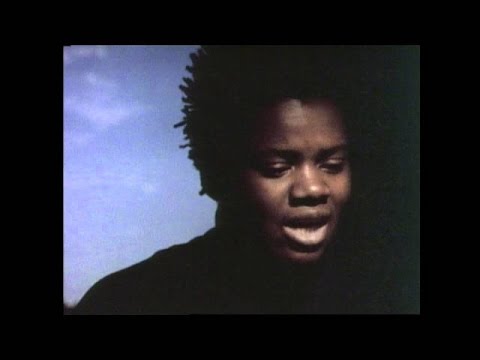
Listen to this cover vs. the original next to the Luke Combs version. Written and recorded in 1987, produced by David Kershenbaum, released in April 1988 on her first album. It reached number six on the Hot 100 that August, earned three Grammy nominations, and won Best Female Pop Vocal Performance. In 2023, the Luke Combs cover went to number two, and the CMA gave Chapman Song of the Year for it.
A great song about almost getting out.
Listen to how little is there. One guitar, one dry voice up close, and a band that waits for the chorus to come in, then stays small once it does. Put the Combs version beside it on your analysis list and hear what a full band adds, and what it covers up.
YouTube Wisdom of the Week 📚
Build Work That Lasts (Ryan Holiday with Evan Carmichael)
|

Perennial Seller — Ryan Holiday
Holiday’s useful bit for us: the albums, books and shows that are still popular twenty or thirty years later were made by people who decided what the work was for, and who it was for, before they made it. Rick Rubin is mentioned in the book for exactly that, getting his artists to stop thinking about the release date and root the work in something that will still be true in ten years. A mix made to impress the room we don’t have yet is made for nobody. Make it for the one listener in the car.
Plugin of the Week 🔌
Sunset Sound Studio Reverb II (IK Multimedia)
The rooms at 6650 Sunset Boulevard, measured: Studios 1, 2 and 3, the live rooms, the echo chambers, the EMT plates and the spring reverbs, 336 impulse responses in all. Van Halen’s first album and Exile on Main St. were made in those rooms. Version II lets you run two of them at once with their own EQ, and stretch a room from nothing to twice its size. The Hollywood studio you are not booking this year, in the room you have.
Free Plugin of the Week 🆓
Spitfire’s free instrument series: soft piano, strings, choir, drums and dozens more, one download each, recorded by the same team that makes their paid libraries. Free instruments that sound expensive, which is most of what a dream studio is for.
Unsolicited life advice for music makers



Responses