

“Our ikigai is different for all of us, but one thing we have in common is that we are all searching for meaning.”
— Héctor García and Francesc Miralles, Ikigai
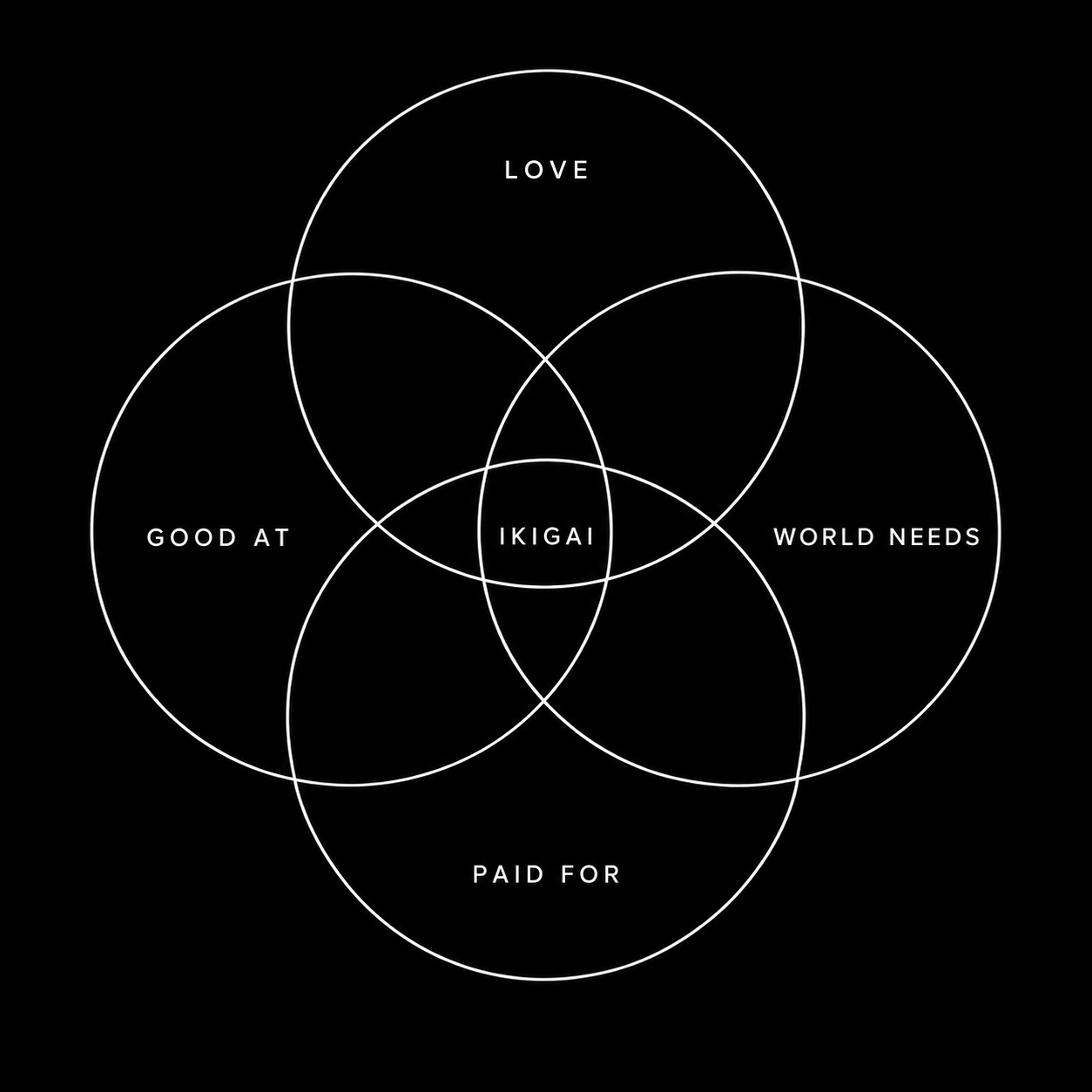
In music production, four things are supposed to line up: what we love, what we are good at, what people need, and what pays.
Where all four overlap, the diagram says, is ikigai.
We often stand in two of those circles and call it a career.
The Starting Point
Ask a producer what they do and the answer usually covers two of the four.
We love the work, and we are good at it, but the rent comes from somewhere else.
Or the rent is covered by wedding videos and corporate gigs, but our own songs have not been opened since March.
Two circles pays the bills, but it is not the same thing as a career.
The Invitation
Write the four down as itemized lists of facts instead of feelings.
What we love is the part of a session we would do for nothing, and we have all done it for nothing.
What we are good at is the thing people ask us for twice.
What the world needs is whatever somebody emailed about this month, and what pays is the invoice that cleared.
Four lists take about four minutes.
The Test
The four-circle diagram is not Japanese.
Mieko Kamiya, a Japanese psychiatrist, wrote the book that made the word famous in 1966, and there are no circles in it.
Her ikigai is the reason a person gets up in the morning, and it can be a grandchild, a garden or a choir on Tuesdays.
The circles come from a purpose diagram drawn in 2011 by Andrés Zuzunaga, which a blogger named Marc Winn relabelled ikigai in 2014.
So the poster on the studio wall is a Western diagram with a Japanese word on it. But it works surprisingly well.
The Guidepost
The deviation from the original concept is not a reason to axe the diagram.
Kamiya's version is smaller and more useful, because it asks what makes tomorrow worth getting up for, today.
A mix booked for Thursday counts, and so does finishing the song nobody asked for.
The Change
Pick the circle that is emptiest and put one thing in it this week.
If the money circle is empty, price the one service people already ask us for and put it on a page they can find.
If the love circle is empty, block two hours with no client, no deadline and no notes.
Pro Tip: One page, four headings, four lists, taped beside the monitor where the work happens.
The Return
Nobody fills all four circles at once, and the ones who look like they have got there one circle at a time.
The four lists change every year, which is why they are worth writing down instead of feeling.
Check them in January, check them again in June, and notice which circle is empty both times.
Before you say yes to the next project, instead of asking: “Can I do this?”
Ask:
“Which circle does this fill?”
Free Ableton Live Course and Music Production Resources
Song of the Week 🎧
Sinéad O’Connor — “Nothing Compares 2 U”
|
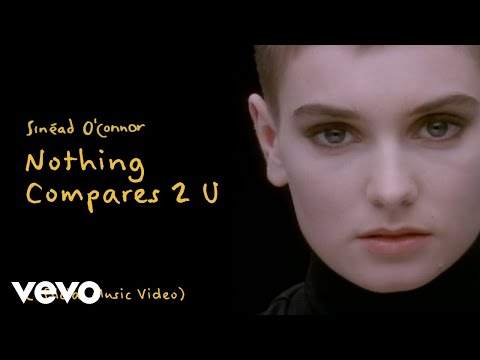
Prince wrote this song, recorded a demo in 1984 and handed it to The Family, a Paisley Park side project. It was never released as a single, and almost nobody heard it. Sinéad O’Connor and Nellee Hooper cut their version in 1990; it spent four weeks at number one on the Hot 100 and went to number one in more than a dozen countries. The video is one close-up shot, directed by John Maybury, and it won Video of the Year at the MTV awards that year.
Four circles: Prince had the first two, and the song still sat there for five years.
Listen to what is not there in this version. It's just a drum machine, a small string line, and a voice recorded close enough to hear her breathe.
YouTube Wisdom of the Week 📚
How Great Leaders Inspire Action (Simon Sinek, TEDxPuget Sound)
|

Start with Why — Simon Sinek
Sinek's point is that people do not buy what we do, they buy why we do it, and the why has to be decided before the what. That is the fourth circle. The reason somebody hires one mixer over the nine other options using the same plugins is rarely about the plugins. Write down why you do what you do before deciding on the price you charge.
Plugin of the Week 🔌
Universal Audio's model of the Pultec EQP-1A, the 1950s passive EQ where boosting and cutting the same frequency at once is the right answer. Set the Low Frequency to 100 Hz and turn Boost and Atten up together, and the bottom end gets bigger and tighter at the same time. A/B it against a stock EQ on the same bass and hear which one you prefer.
Free Plugin of the Week 🆓
Free, and it gets close enough to make the point. Three bands, a handful of EQ models and an output saturation stage.

Unsolicited life advice for music makers





Responses